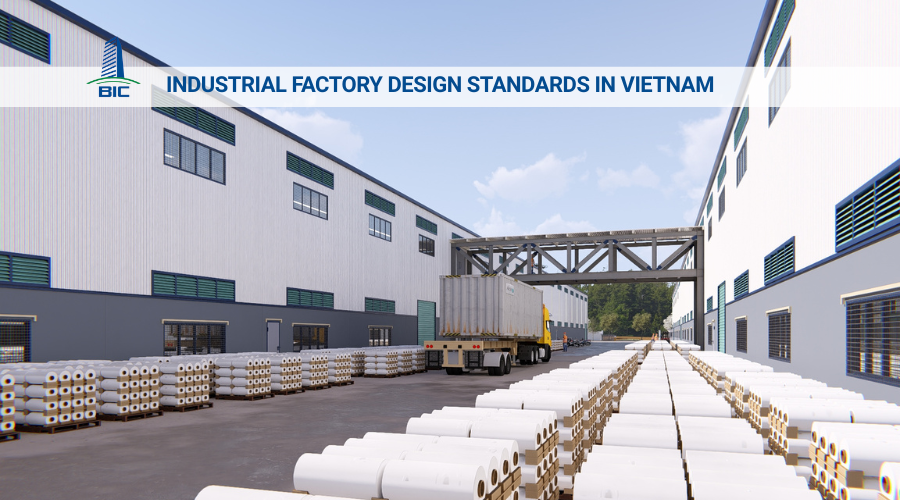
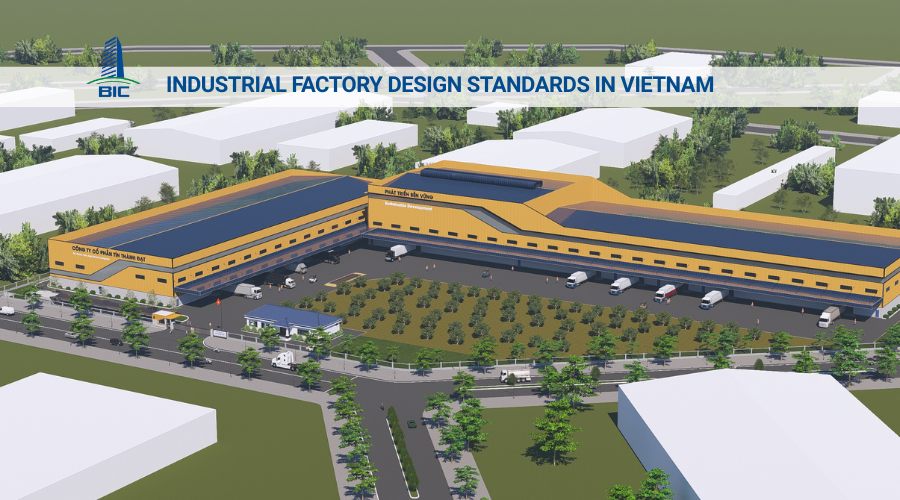
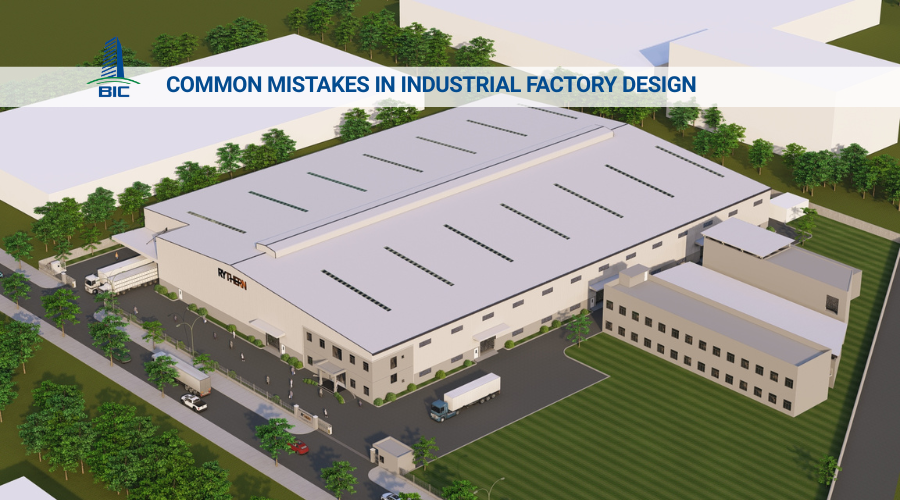
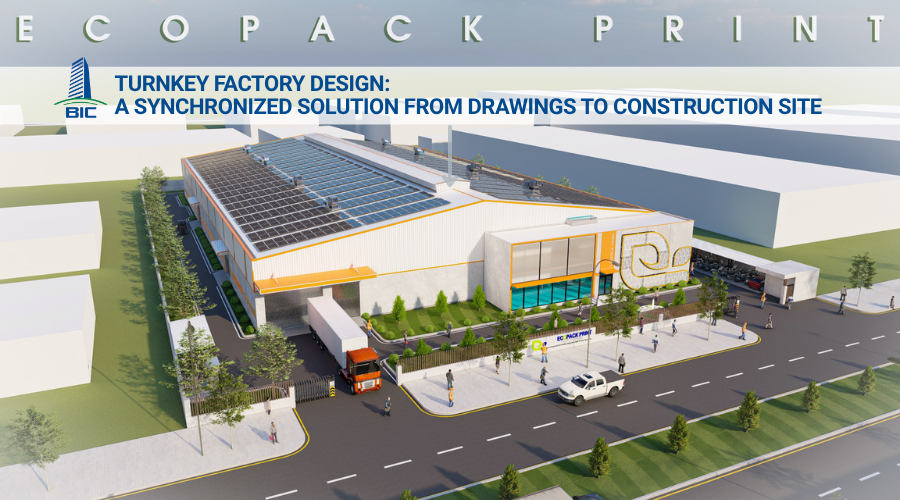
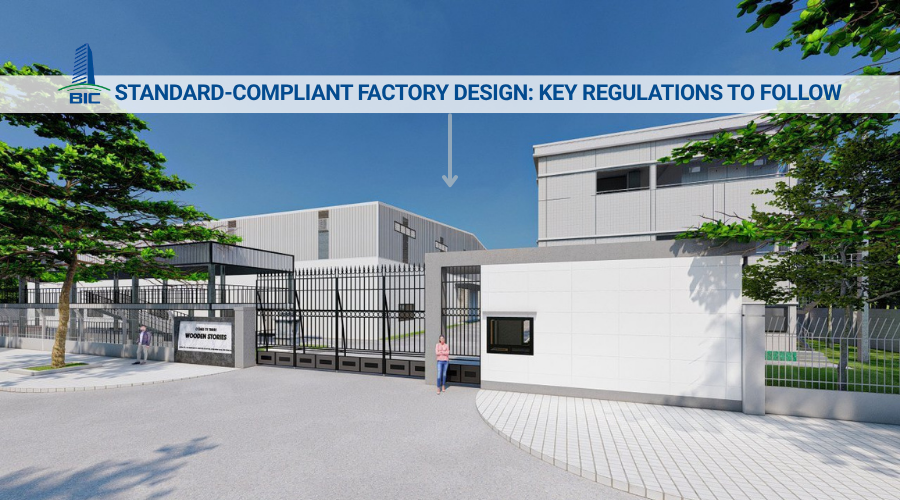
Design standards for industrial factories that investors need to know when they want to build industrial factories, pre-engineered steel buildings
The legal basis for factory construction standards to ensure the construction and operation of the new factory is regulated through documents that clearly define the design standard items for the design contractors. Strictly follow construction
+ Vietnam construction regulations according to Decision No. 682/BXD-CSXD dated December 14, 1996 of the Minister of Construction.
+ Vietnam construction regulations according to Decision No. 439/QD-BXD dated September 25, 1997 of the Ministry of Construction.
Standards for industrial factory design and construction on each item
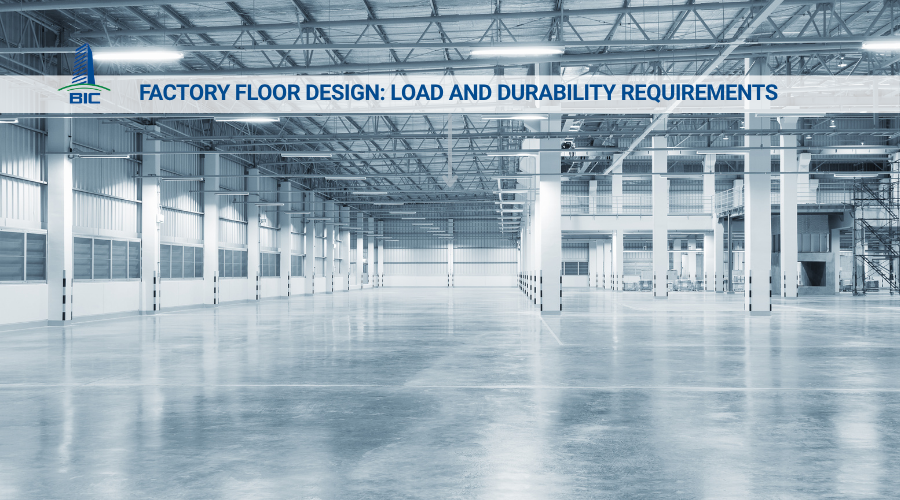
For the design standards of foundations and factory floors, drawings of foundation structure are required according to the provisions of TVN2737:1995 in order to meet the requirements of impact load technology, engineering geological conditions, and hydrogeology.
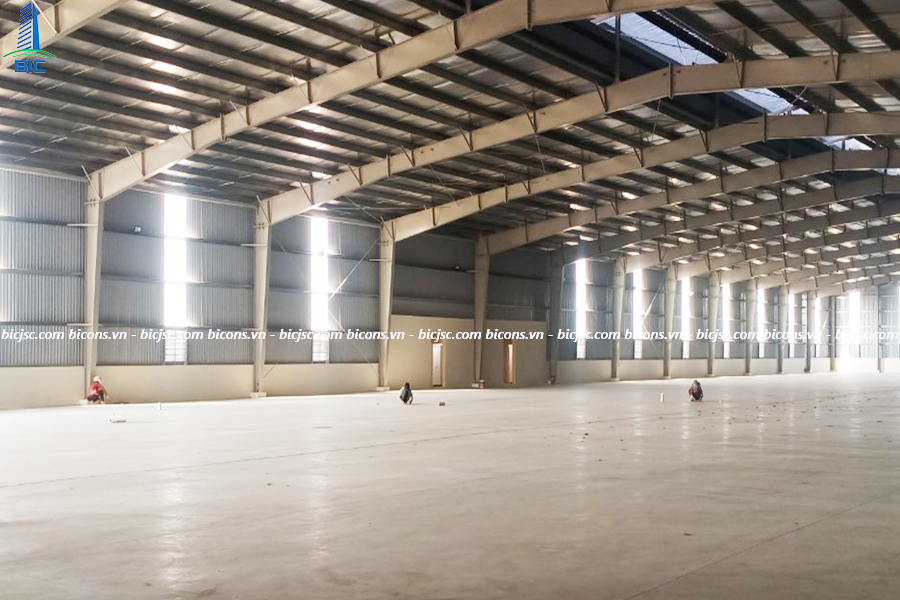
+ The design of the industrial factory floor on the ground must have geologically adaptive background treatment measures
+ Design the industrial factory floor to ensure the technology and conditions of use to choose the appropriate background structures according to the background types
+ Concrete factory floor: reinforced concrete with impact resistance, concrete resistant to acid and alkali corrosion, asphalt concrete
+ Steel factory floor
+ The factory floor is tiled with cement tiles
+ The floor of the factory is paved with boards, wood, and plastic
+ If the design of the workshop floor for the warehouse area, the necessary position for the boovs to unload bulk materials must be flat.
+ The concrete workshop floor surface must be divided into each cell and the length of each dimension of a dark cell is 0.6m, between the foundation cells must be inserted with bitumen. At the same time, the concrete lining has a minimum thickness of more than 0.1m .
+ The width of the pavement is required to be from 0.2-0.8m and the slope is 1-3%
Standards for design drawings of workshop foundations and technical systems for underground works of factories must be consistent with the physical and mechanical properties of the ground and the natural characteristics of the building foundation.

The design of the foundation for the construction of a factory has the height of the foundation surface lower than the ground level with the difference
Steel column deviation 2.2m
Column with wall insert frame 0.5m . deviation
Reinforced concrete column 0.15m . deviation
The height of the steel column base of the viaduct corridor supporting the pipes between workshops must be at least 0.2m higher than the leveling height.
The foundation has expansion joints and the workshops are expected to expand the common design for 2 adjacent columns.
For the foundations under the brick wall, if it is a frameless house: the foundation depth is less than or equal to 15cm, it is necessary to design the beam to support the wall, and the upper surface of the supporting lagoon should be at least 3cm lower than the foundation when finishing.
The design of the foundation of the workshop for the part subjected to high temperatures, using a protective layer of heat-resistant materials, the foundation subject to the effects of corrosion must have a design of anti-corrosion materials.
The factory roof slope standard according to the material depends on the choice of roof material, there will be a standard for the roof slope.

+ The factory uses the roof sheet of cement asbestos with a slope of 30-40%
+ Slope of corrugated iron factory roof with corrugated iron roof 15-20%
+ Slope of pitched roof 50-60%
+ Roof slope of reinforced concrete panels 5-8%
Standard roof slope if the workshop is less than 8%, it is mandatory to have a heat gap arrangement in the reinforced concrete waterproofing layer and the distance between the heat joints should be greater than 24m along the house.
The design of factory drainage in the dependent part and the blood roofing material requires the technology to design the inside or outside of the factory roof.
For the design of a workshop with a roof door or a level roof with a deviation of 2 roofs greater than or equal to 2.4m, water catchers and drains must be provided. In case the deviation of the two roofs is less than 2.4m, it is not necessary to make the slats, but there must be measures to build the workshop to reinforce the roof below from the storm water.
For mixed roof doors with lighting and ventilation functions, it is mandatory to design vertical glazing and only inclined installation when there is a reasonable argument. The length of the roof door should not be greater than 84m and should be placed back and 1 step away from the gable column. In addition, the roof door must not have heat, steam or moving equipment, if any, it must not be a roof door.
If the production workshop is harsh, humid, and requires a ventilated roof, it is necessary to ensure that it has a roof to prevent rain, no need to install glazing, but just leave a gap with the height of the gap from 0.15 m to 0.3 m.
Arrangement of anti-rain splash angle is not more than 15° for rain-resistant manufacturers or in the space where the shutters are inclined, the anti-rain angle of the upper roof can be increased to 45°. The shutters are not made of fragile materials.
The roof door part requires fixed glazing, the lower part is open, the upper part has a racing roof and the glass thickness is greater than or equal to 3mm. If the factory design autocad drawing file has a crane, the roof door must be fitted with a glass protection net with a minimum grid width of 0.7m, mounted vertically and equal to the projection of the door frame when the door frame is tilted or lying down. horizontal. If the reinforced glass does not need a protective mesh.
When designing a factory, the choice of roof door styles such as: factory drawings of dome, sawtooth, letter M, frill, ... will depend on the technology and direction of the workshop.
Construction design standards for workshops for walls and partitions will depend on the characteristics, scale, and use needs to choose the right types of factory walls (such as load-bearing walls, self-loading walls, etc.) framed wall,…) with materials such as bricks, natural stone, asbestos-cement panels, reinforced concrete slabs. Note that if the outer wall is made of asbestos-cement panels or light materials, the base design should be brick, stone or concrete and be at least 3cm higher than the top when finished.

If using brick wall base, there must be a layer of waterproofing against rainwater and moisture with 20cm thick cement mortar mark 75 placed horizontally on the floor when finishing.
For the workshop partition wall, the design can be disassembled very conveniently.
If the design assumes that the factory has a maximum span of 12m, the maximum column height is 6m.
Design standards for industrial factory construction for windows need to ensure the following conditions:
The maximum door height is 2.4m from the product and must be able to open and close
Window height greater than 2.4m must be fixed into a fixed frame to prevent storms and in case of necessity, a door with a firm clamp and mechanical opening and closing must be installed.
In the design standards for industrial factory drawings, there are many other requirements for:
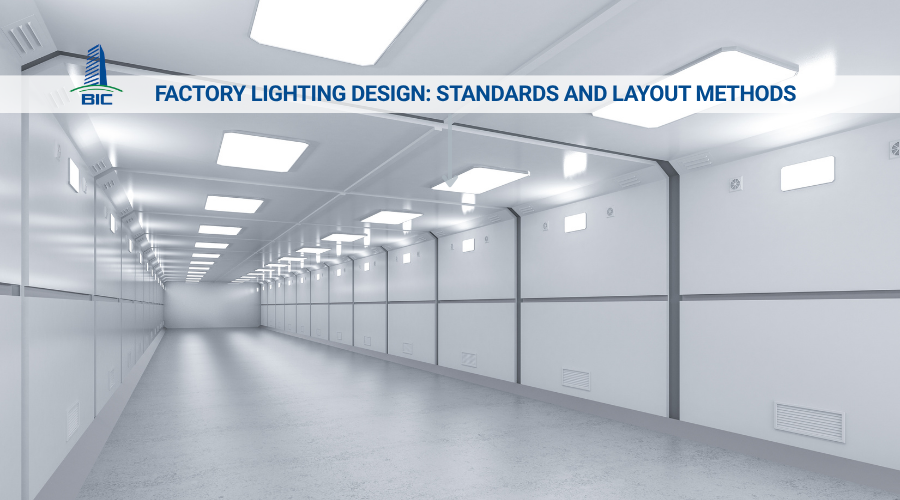
Electrical design standards for workshops: Design drawings of electrical systems for lighting and manufacturing industrial workshops need to meet reasonable production and electrical safety needs such as:
+ Electrical design drawing of factory lighting
+ Electrical outlet design drawing
+ Internet design drawings.
+ Design drawings of cable television and telephone (if any).
Detailed diagram of smart electricity (if any).
+ Design standards for fire prevention and fighting (pccc) for factories;
+ Design standards for lightning protection systems for factories.
In addition to the technical standards for factory design, the investor should also pay attention to the feng shui of the factory in the design, construction, space layout, location selection to get good fortune, do business. thrive. Above is some basic information about the latest factory design and construction standards, wish you have a useful reference and design and build an efficient factory.