The foundation types in the industrial house are the basic foundation to ensure the solidity of the building. Workshop foundation is the technical structure located at the bottom of an industrial factory or in any construction.
Because the foundation types in industrial buildings will be directly affected by the load of the whole building and transmitted to the ground, ensuring that the building can stand firmly under the influence of live load and other conditions. at another weight
In the construction of industrial factories, from small to large projects, there are usually 4 types of foundations commonly used in civil and industrial factories.
Single nail
It is a type of foundation that supports a column or a cluster of columns standing close to each other with bearing effect
This type of foundation is used at the foot of the column. Single foundation located individually on the ground can be square, rectangular, octagonal, round...
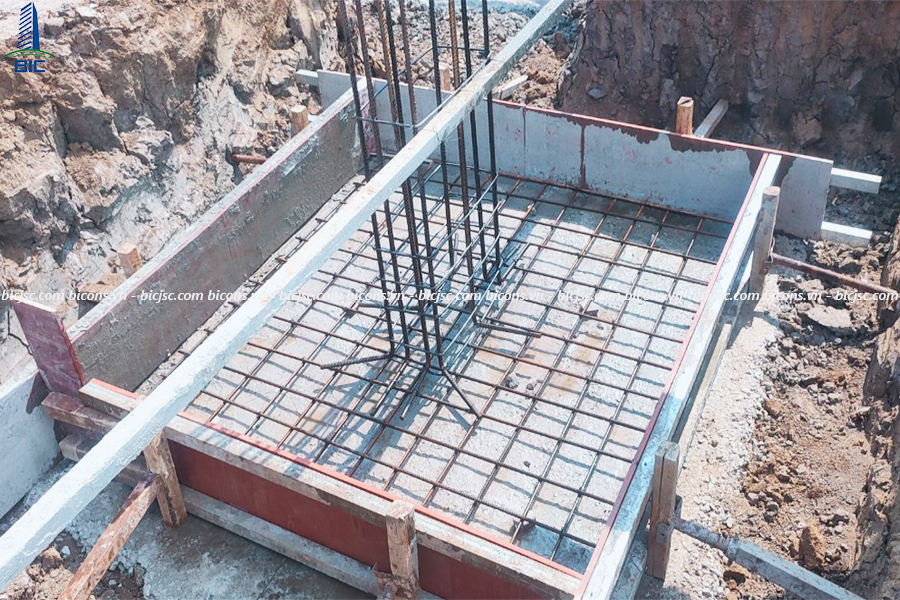
Nails can be hard nails, soft nails or a combination. This type of foundation is also often used to repair and renovate factories and is also the most economical solution of all types of foundations.
It is a type of foundation consisting of piles and large piles, used to transmit the load of the structure to the good soil layer to the gravel located deep below.
Large piles can be driven down into deep soil layers thereby increasing the load-carrying capacity of the factory foundation
Bamboo poles in Vietnam are used as a method of reinforcing the ground under the foundation of the building
Nowadays, the method uses reinforced concrete piles to press the piles into the ground.
A type of foundation usually in the form of a long strip that can be independent or intersecting in the shape of a cross, to support walls or columns.
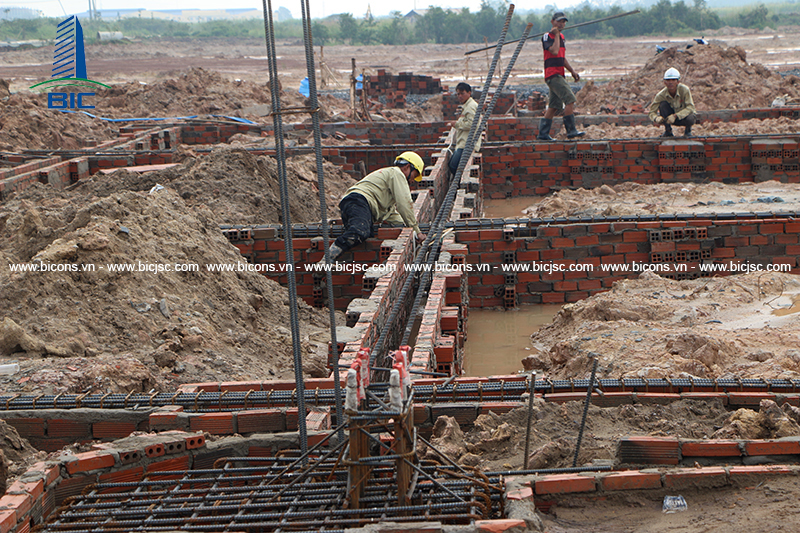
The construction of ice foundations is usually digging the foundation around the site or digging parallel foundations in that area. Usually ice foundation is used, it settles evenly and is easier to construct than single foundation.
If a series of columns or walls have both directions, the intersecting tape foundation will have the shape of a checkerboard on the ground. The tape foundation in the back of the house is often better used than the vertical tape foundation, wall foundation. Usually, the bottom of the foundation is placed at the same depth, so the foundation in the house is usually wider.
There are different types of rafts: flat rafts, box-shaped rafts, ribbed rafts, mushroom rafts
The raft foundation spreads under the entire structure to reduce the pressure of the structure on the ground.
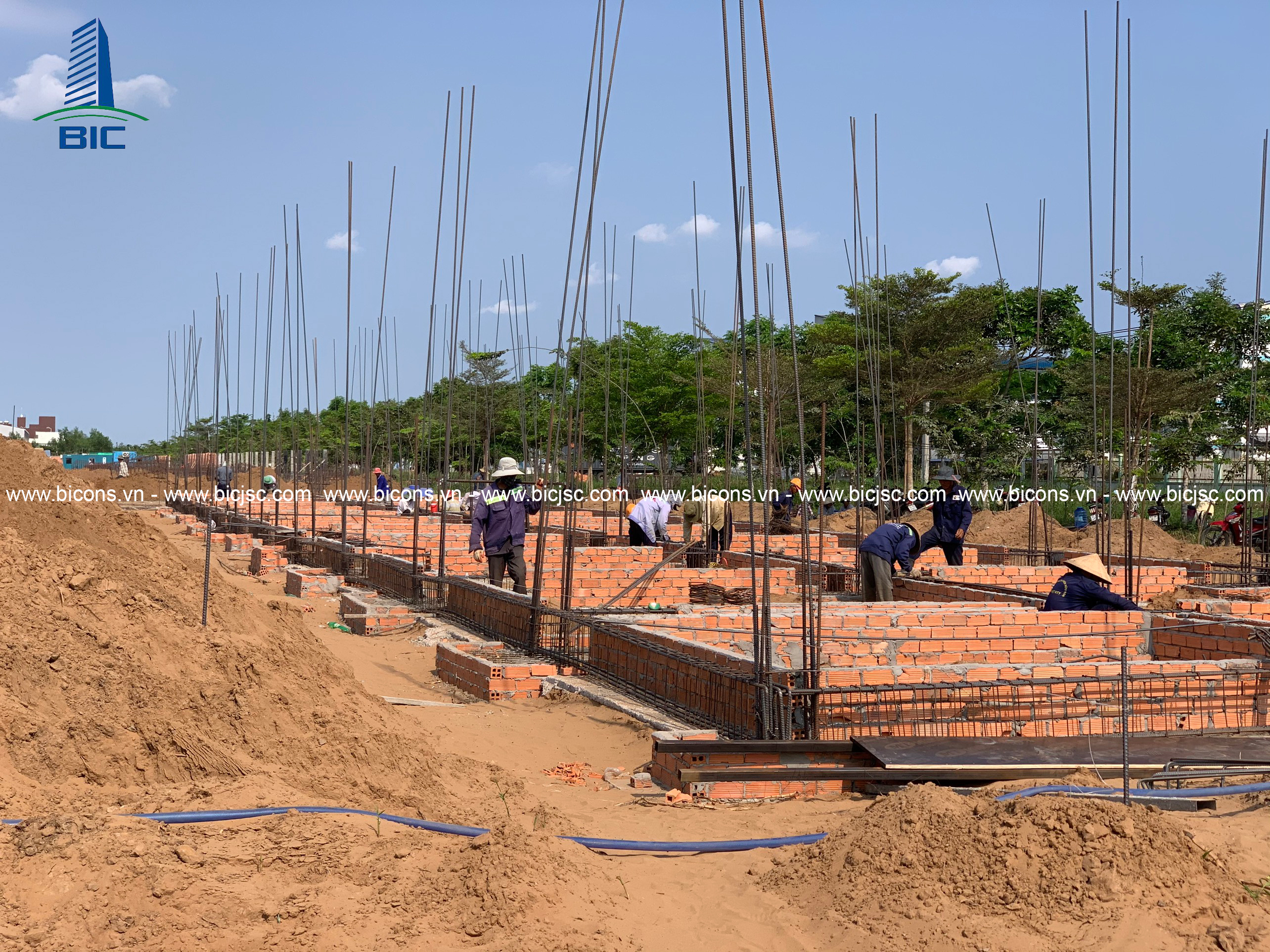
This type of foundation is mainly used where there is soft ground with weak compressive resistance even though there is no water or because of structural requirements.
Among the types of foundations in industrial buildings, the single foundation and the pressed pile foundation are most commonly used in the construction of industrial buildings.
The foundation length is the part that connects the piles together and has the effect of distributing force and increasing the durability of the building. Ensure the force balance for the entire surface and the entire area of the foundation.
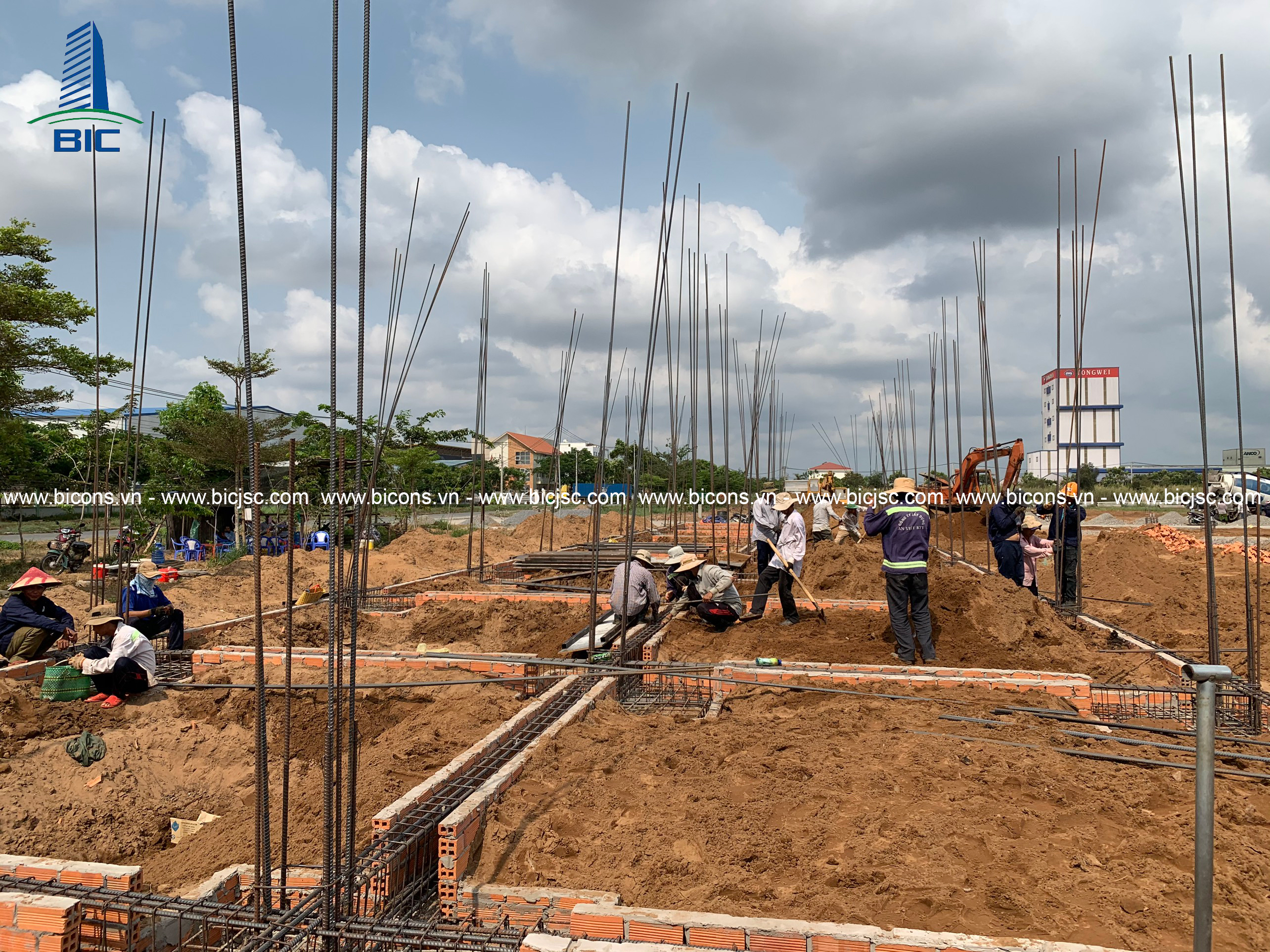
The design of the foundation also depends on the geology of the construction area. The buried depth and the height of the station are carefully calculated. In addition, the design drawings need to comply with the provisions of the construction regulations. To ensure the construction load. These parameters are shown in detail in the design drawings
The rectangular foundation has a moderate slope so that the concrete does not slip during construction. There are often ridges on the nail bed to help increase the hardness of the nail
Pulling nails
Also known as slats, is the cross-linking momentum between the foundations. The foundation bracing is located at the height of the building foundation with two functions of supporting the partition wall and preventing the deflection settlement between the foundations, if the foundation brace is used to connect to prevent deflection, the foundation must have a size to ensure this role.
Nail neck
The foundation neck has a height designed to ensure the foundation depth in the soil to meet the requirements of the manhole water supply and drainage system and the foundation base has a depth on top of the good soil below, this depth is also considered. influence of the location of the groundwater level. The depth of foundation burial contributes to the increase of load-carrying capacity and stability of the ground.