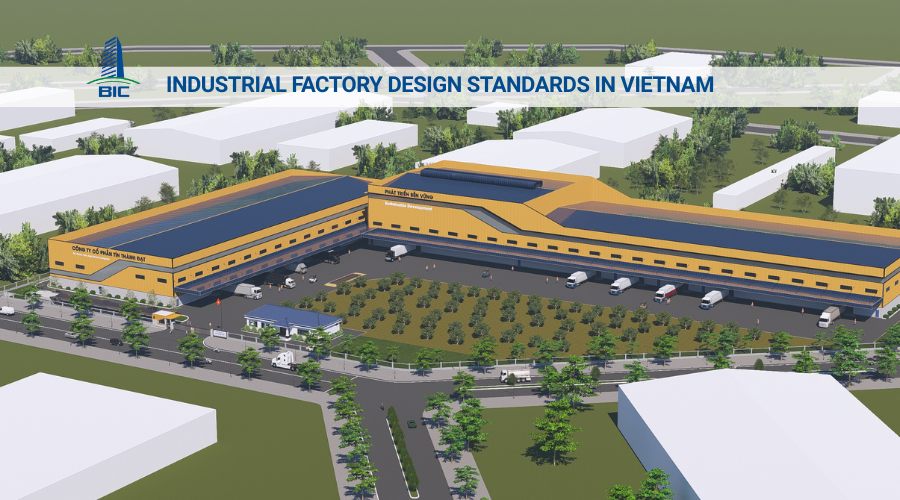
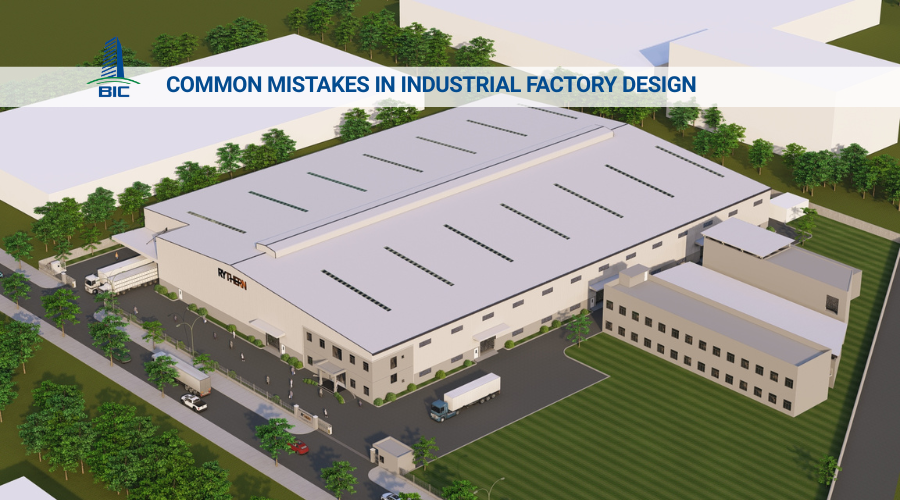
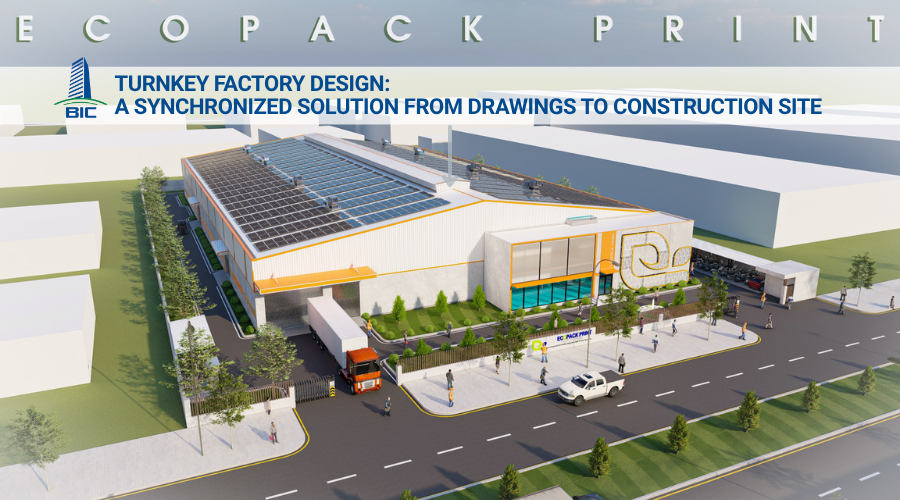
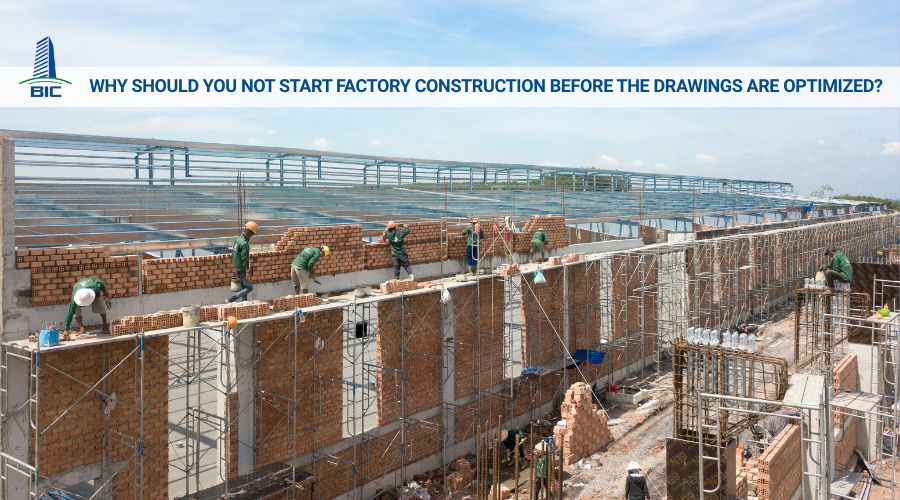
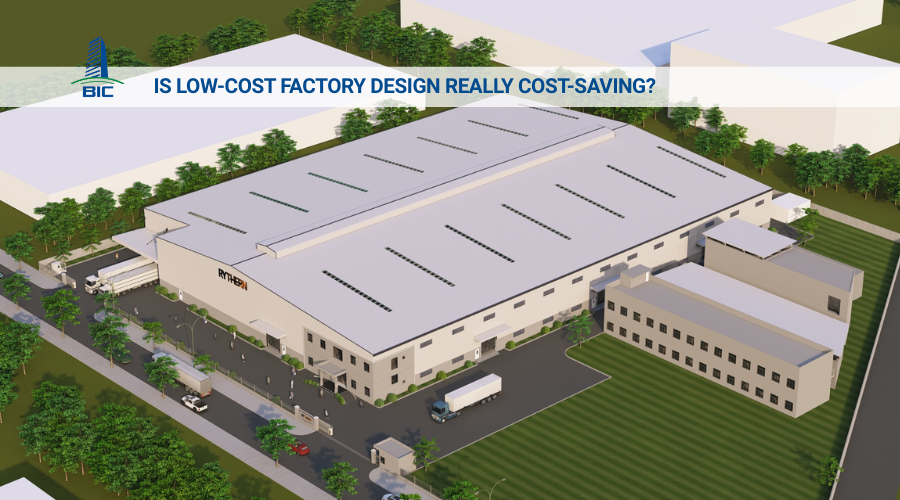
The design of the general premises of an industrial enterprise plays a very important role in the design and construction process of the factory. It will solve the synthesis between the technical aspects of production; planning the site, the volume of the work complex; construction engineering; aesthetics and social issues. Solving the synthesis of the enterprise's own with the general of the country's economic planning and urban construction.

The actual price close to the actual site of the project compares many problems in many different fields, then synthesizes and gives the optimal plan to achieve the investor's expectations. The selected plan must fully demonstrate its scientific character; the rationality of production organization; meet the requirements of business and management, create the best conditions for employees to operate in the factory, save available resources, be able to achieve economic efficiency and performance. high aesthetic.
Documents on the production technology of the enterprise: is a product manufacturing method is a system of interrelated measures in handling, processing and processing materials in the production process. Production technology has a decisive influence on the economic expenditures of enterprises.
Required documents include:
+ Production line diagram of the whole factory as well as each project
+ Diagram and means of transporting goods and materials in the factory premises
+ Technical and energy supply network diagram
+ Production characteristics of the whole factory
The factory process of each different industry needs to design a separate production line. The technological line diagram of each factory shows the continuous process from the time raw materials are brought into the factory, through the processing and processing processes in the workshops, creating products to be exported out of the factory. .

The diagram of the whole factory's production line shows the reciprocal production relationship of the factory's workshops, works, and production equipment in the common process.
The technological line diagram of the workshop shows the production relationship of the production stages in the workshop with each other and with surrounding workshops.
+ The main axis represents the main production process of the factory
+ Branch lines represent sub-production lines serving the main line
For each type of production, there are many different production methods: In the food factory, there are 5 methods: electrolysis, ionization, carbonation method, sulfite method and liming method. Each method has a separate production line that has a clear influence on the cubic layout of the workshops as well as the solution to planning the space of the factory.

The general technology lines and of each production stage may have different characteristics in terms of production methods, hot working, cold working, dry, wet processing, chemical reaction. Workshops often require suitable spatial layout solutions, and those production characteristics and other factors greatly affect the general floor plan solutions of industrial factories. .
Transport diagram in the factory
This diagram shows the transportation and transportation requirements, the means of transport needed to transport materials from outside to the factory, and the transportation of finished products and finished products from one workshop to another. within a factory. Help designers arrange the right position of production works according to the production line, rationally organize the traffic network and choose the optimal plan of total space for the factory.
Technical and energy supply network diagram
This diagram shows the system of engineering and energy supply pipeline networks for production in the factory, their correlation relationship with the factory transportation system and the layout solution… Network diagram The technical and energy supply grid has a great influence on the architectural planning solution of the factory facade.
Production characteristics of the factory
Each type of enterprise has specific production characteristics, generating toxic dust, flammable or explosive or requiring high hygiene in a special microclimate inside the factory. The influence is quite large on the assembly of the workshop block, the block plan, their position in the total surface of the master plan solution.
Guidelines for homes and buildings
Unlike civil architecture in industrial architecture, objects belonging to the architectural community of enterprises are often divided into two groups.
Industrial buildings usually include buildings with roofs and enclosed walls, closed or semi-open, with one or more floors

+ The main auxiliary manufacturers produce the auxiliary houses of the warehouse energy supply system, the protective operating stations
+ Administrative managers, technical production managers of buildings serving daily life to serve the needs of daily life in the factory
Industrial factory buildings usually include technical architectural constructions or open-air equipment for factory production.
+ Technical works of hunke silo cooling tower, block pipe
+ Power supply works, power stations, outdoor transformer stations, boiler gas stations
+ Warehouses and yards for storing raw materials and goods
+ Open-air production equipment: blast furnaces, production equipment in the chemical industry, cranes, other open-air production equipment...
The number and types of buildings and structures in enterprises often vary depending on the type of production and technological methods, solutions for building factories, solutions for general floor planning.
The instructions on houses and buildings of each enterprise are given by technology engineers in the form of statistical tables, which show the number of construction items, scale, and construction parameters. basic instructions on production characteristics, working conditions, microclimate regimes. As a result, the new architectures have a basis to design and choose the most economical and reasonable architectural plan.
Requirements on hygiene, fire prevention and environmental protection
Each enterprise has different requirements for sanitation, fire protection and environmental protection, which must be taken into account when designing the total premises.
Fire protection requirements
In order to avoid fire incidents occurring during the production process, when designing, it is necessary to determine the correct level of fire-generating capacity of the enterprise, each building, and the required fire resistance level. of those works, then according to the promulgated construction codes and standards, determine the size of the allowable area for the number of compositing floors and the necessary fire protection distance between the works.
The distance between workshops, warehouse lines, and finished products houses must be arranged in suitable wind directions. The design of the total premises of the factory must comply with the standards and norms of the construction of enterprises.
In order to ensure environmental hygiene for the future enterprise, when starting to conduct research on the general floor plan of the factory, the designer needs to master the violation requirements, standards of hygiene and protection in construction. industrial and civil
The purpose of preventing environmental pollution in practice
Technical measures:
Using machines to completely or partially eliminate hazardous wastes and environmental pollution, in practice, use the following two methods.
Using machinery to completely eliminate a part of hazardous waste and environmental pollution. This is the most positive measure but requires a large investment capital
Measures of architectural planning and spatial organization using isolation distances, number of sanitary zoning functions, selection of house orientation. Some rules to know:
+ Direction of the house: to ensure good ventilation and natural lighting, and at the same time reduce direct solar radiation, the vertical axis of the building must form an origin not less than 45 degrees compared to the dominant cool wind direction of the building. each climate zone. When the house is in the shape of the letter E, U, the concave must be in the direction to catch the cool wind.
+ The yoke between items; To ensure good ventilation and natural lighting, the distance between houses can be temporarily determined as follows: When a> 3m, then l = ( H+ h)/2 and When a<3m, then l = ( H' +h)/2
Documents about the nature and climate of the construction site
One of the important scientific bases for architectural design of factories and industrial factories is the documents on surveying the construction site.
+ Document about the terrain characteristics of the land: shape of the land, topographic map, the relationship of the land with the surrounding area
+ Geological and hydrological documents: diagram of geological cross-sections, groundwater level...
+ Climate documents: parameters of wind, rain, sunshine, humidity...
The principles of the architectural complex for the overall design of the industrial factory premises
General planning of industrial factories is not only a technical issue but also an art. The architecture of the industrial factory complex must first of all conform to the specific requirements of the industrial architecture based on the technological chain and production characteristics of the enterprise, and at the same time must conform to the highest organizational principles. architecture in general and the principles of industrial architecture in particular.
The means to combine the architecture of a factory is a very rich and diverse shape of production buildings, engineering works with a green system with many different functions. A good general plan, in addition to satisfying the highest requirements of production technology, must also satisfy the requirements of a unified architectural combination to create a harmonious, balanced, and flexible architectural ensemble. Active and diverse, with high artistic expression, fully and clearly expressing the requirements and characteristics of the technological chain, the basic elements of the solution to planning and building the organization of the architectural and artistic space. art.
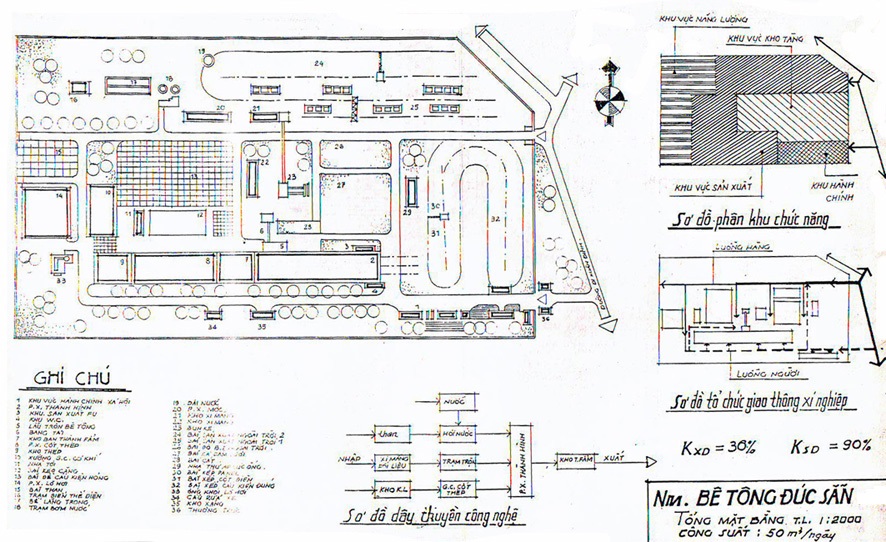
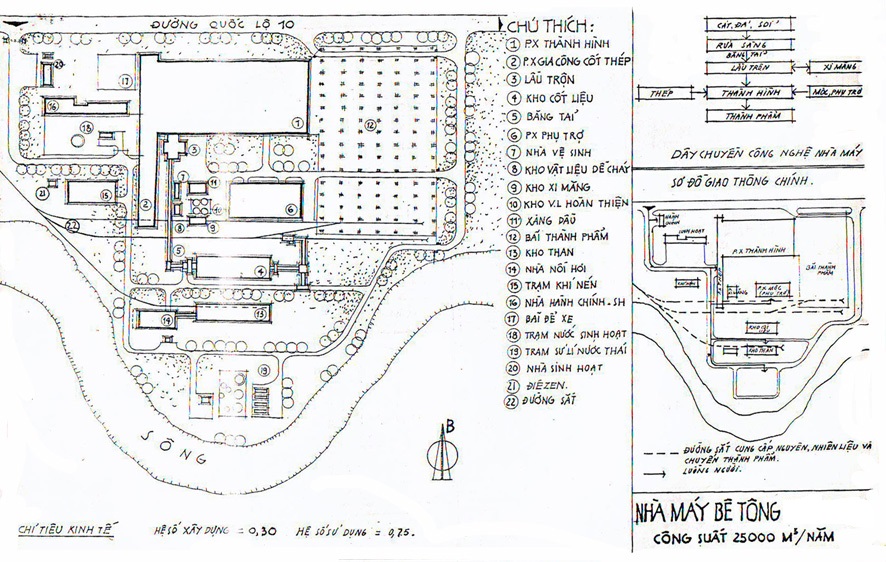
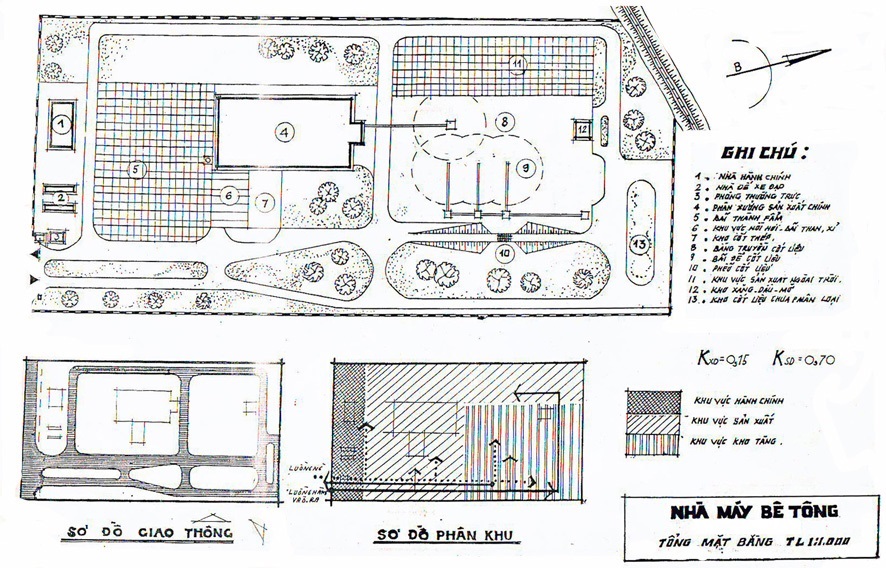
General floor plan of some industrial plants.
1. Precast concrete factory
2. Concrete factory
3. Concrete Factory
4. Mechanical tool factory No.
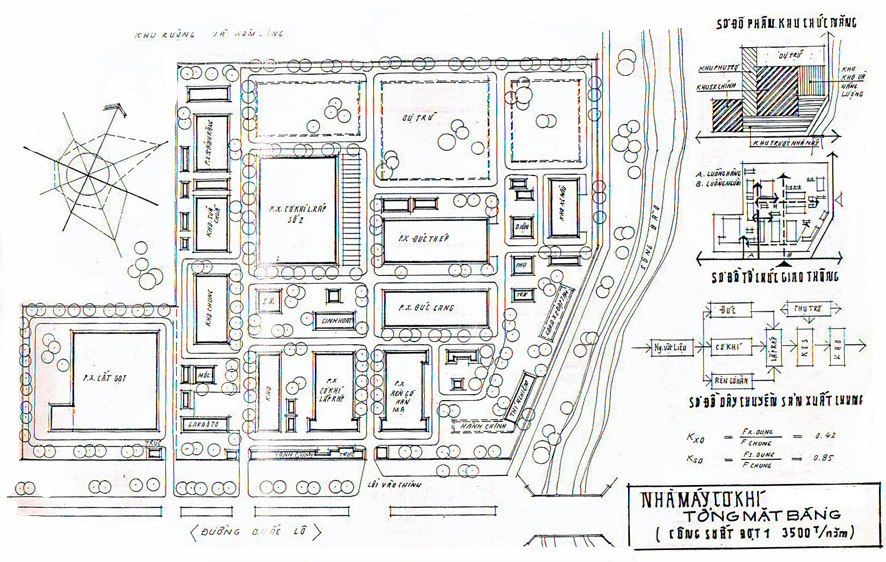
5. Cam Pha mining machinery and vehicle repair mechanical factory
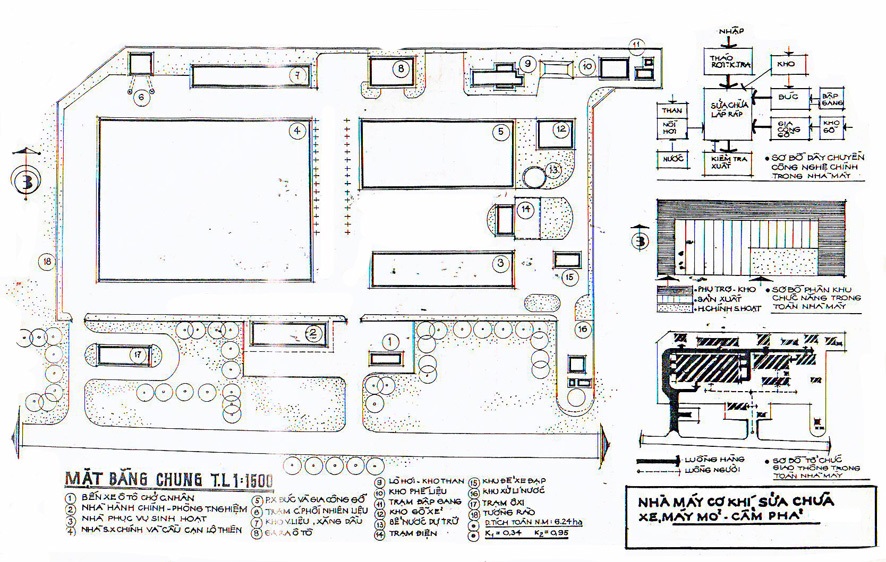
6. Fear factory
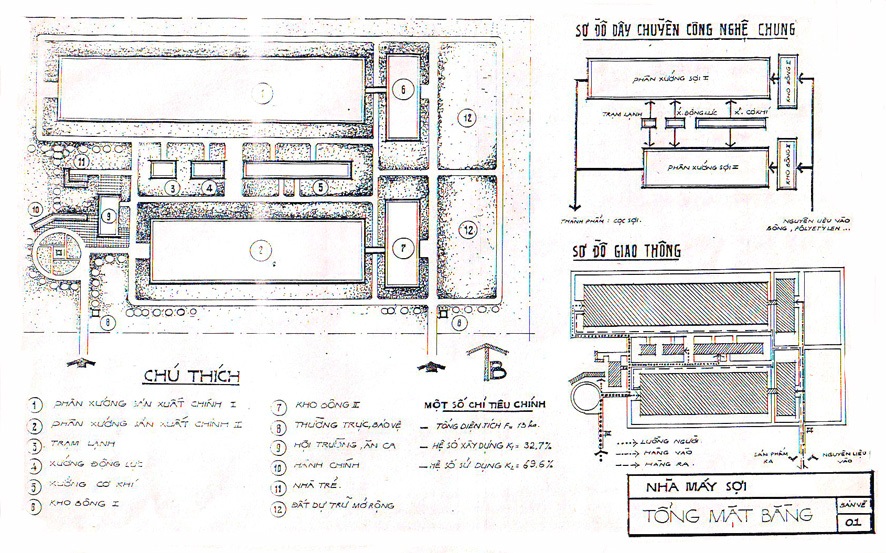
7. Textile factory
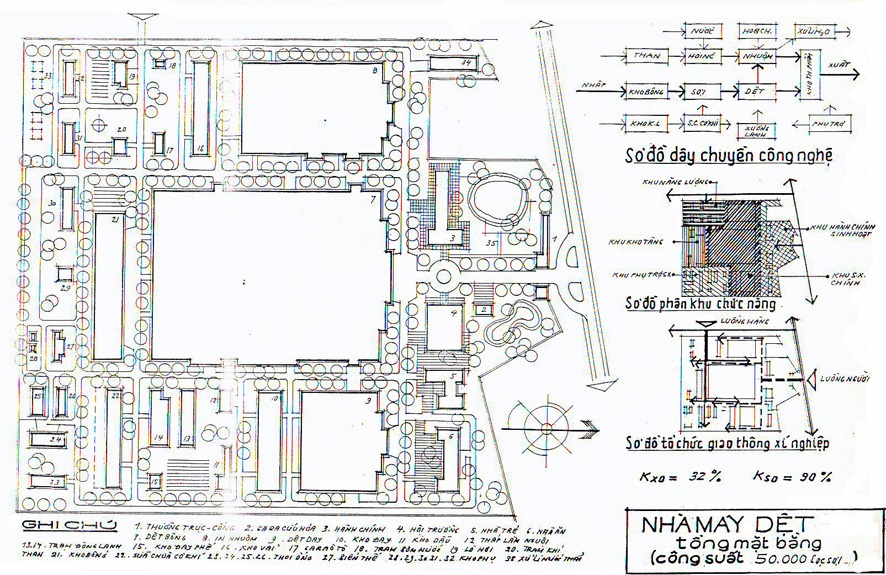
8. Candy Factory
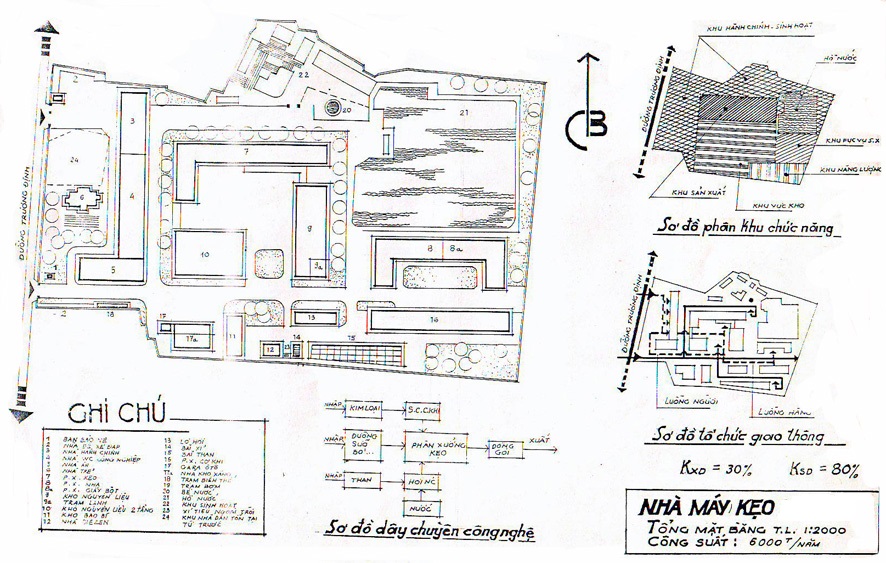
9. Glass Factory
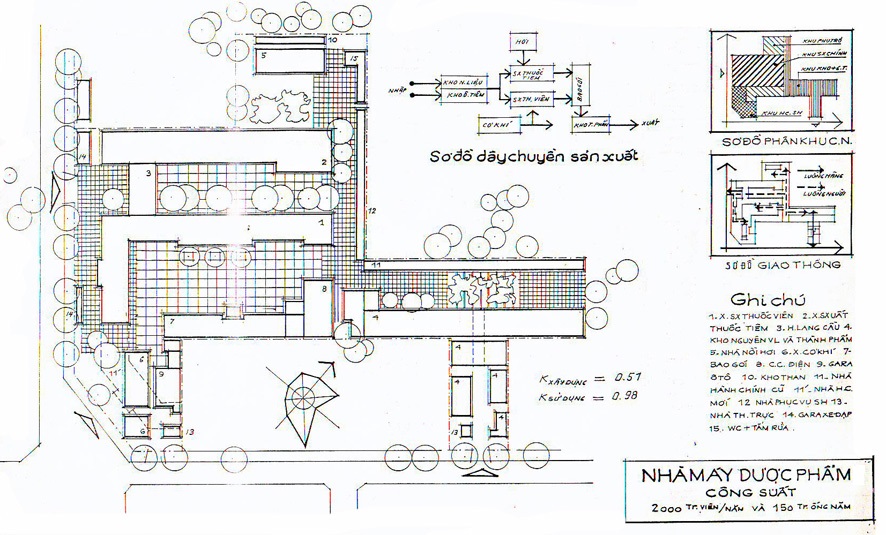
10. Pharmaceutical factory