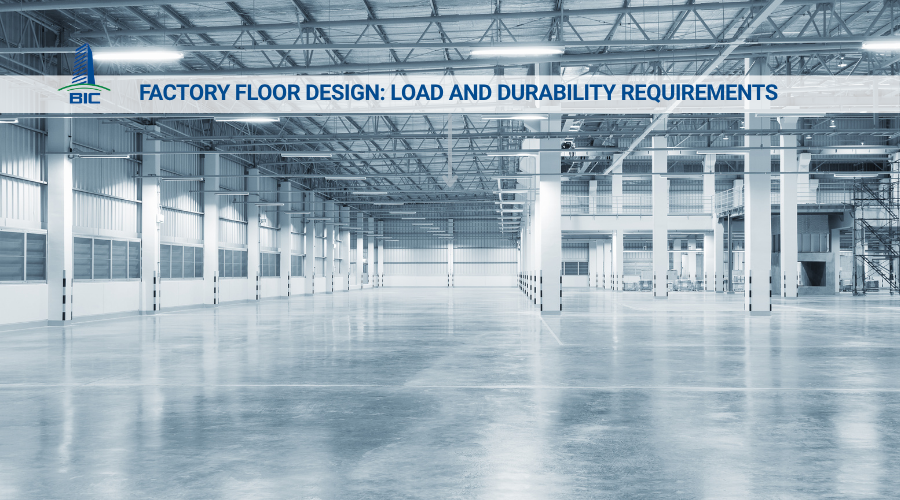
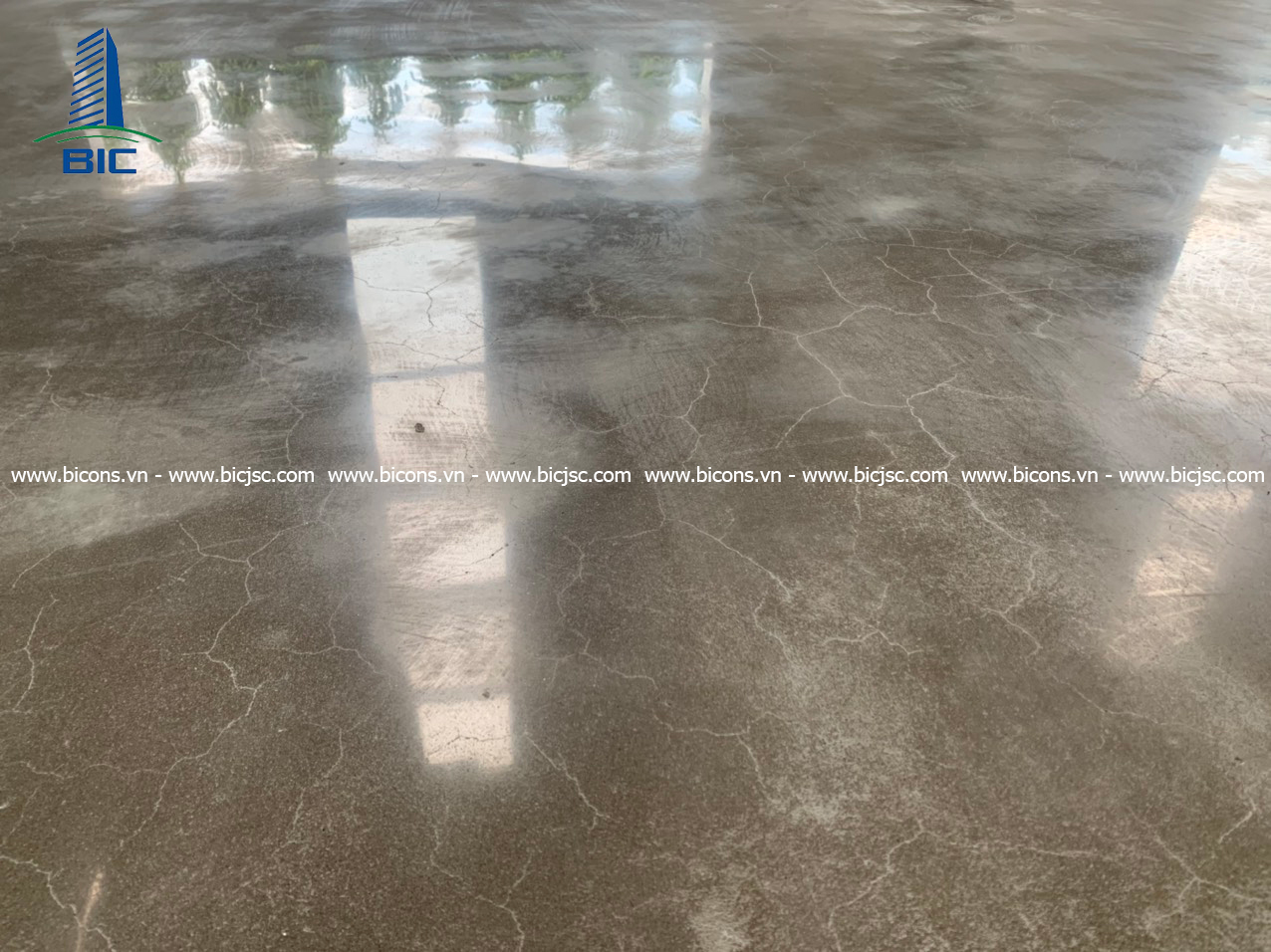
Cracking concrete floor is not dangerous This is a problem that investors wonder when putting the factory into use for a long time, the cargo road has cracked phenomenon.
Signs of concrete floor cracking are dangerous because it seriously affects the safety of the structure. Therefore, it is necessary to take appropriate measures.
Concrete cracking in factories often occurs due to cracking due to load
The distribution of cracks usually occurs in the regions predicted to have the greatest tensile stress. For simple beams and continuous beams, root square cracks to the beam axis usually develop in the lower part of the mid span or the upper part near the supports.
Oblique cracks near the support or near the point where the concentrated load is applied
In some other cases there may be cracks in the compression zone near where the beam's maximum bending moment occurs.
The shape of the crack shows the danger that if not repaired in time, it will lead to more serious damage and cause accidents during continuous work.
Tensile cracks are caused perpendicular to the stress, such as the direction of tensile cracks of flexural beams is always perpendicular to the lower beam axis, wide and small.
For shear cracks near the knee, usually 45 degrees oblique develops upward and toward the middle of the phlegm
Some crack shapes caused by compressive forces are usually parallel to the direction of the compressive force, classifying the shape of the crack as two small ends in the wide middle.
The crack caused by the torque has an oblique spiral shape, the width of the crack usually does not change much.
The fracture shape due to green impact usually develops 45 degrees obliquely in the direction of impact force
Cracks caused by settlement of the foundation, the cracks that usually have a background shape, usually appear concentrated in the area with a relatively large curvature of the settlement curve. The direction of the root square crack is the same as that of the principal tensile stress due to the ground deformation. For beams and floors, settlement cracks are usually cracks at the base with the beam axis. When settlement or settlement is affected by neighboring structures, there are often oblique cracks in beams near beam and column connections, 45 degree diagonal cracks at floor corners.
It is necessary to review the concrete composition or the construction process is interrupted, the next concrete pouring is different from the previous time. In this case, there are a number of ways to prevent the concrete floor from using mixed additives, the use of chemicals that easily affect the quality of the floor surface, compaction and ensuring the locations when pouring concrete, Accurate aggregate ratio, evenly pour concrete into positions, avoid losing water of cement.
This crack is as dangerous to the puddle ceiling as the entire factory. When the building foundation subsides, structural changes will occur. Spacing between columns is not uniform. From there, it leads to cracked floors and walls. As a result, the ground is not tight enough. Cracks formed due to geology of the construction area. This incident is inevitable, requiring a relocation plan to change the location.
And many other cases lead to cracking of the factory floor when under the influence of the outside climate. The sun with high temperature will make the floor expand, but when the rain comes down very quickly, the floor will shrink. All of this affects the structure, causing them to deform, causing cracking, and rapid deterioration of the building.
+ Handle by cylinder
+ Treatment by pressure pump
+ Treatment of cutting concrete surface in the shape of V
- Accurate crack identification
- Carry out chiseling at the crack locations and when you see the crack, dductj until the knot ends.
- Use a hand-held concrete grinder and grind the cracks to become clearer
- Use a hand-held cutter and cut to widen the crack. Cut out the sides in a V shape with a depth of about 2 to 3 cm
- Clean the cracks after cutting
- Use an oil paste to water the surface of the crack. Pour grout on the crack to level the floor.
- After the mortar is completely dry, apply a waterproofing additive to the crack. Spread the reinforced glass mesh as soon as the first layer of waterproofing has not dried.
- After the waterproofing layer is dry, we apply 1-2 more layers. Wait for it to dry completely, then proceed to apply waterproof mortar and tile
- Soak in water, then conduct acceptance test and handover the project.