The factory ventilation standards in accordance with the law help the factory to ensure the quality and safety of the work. Safety in the factory needs to strictly follow ventilation standards from design to construction and operation.
This standard is a standard for the design of ventilation and air conditioning systems. The purpose of providing air calculation parameters, the cleanliness of the air inside and outside the factory; Calculating the flow is not difficult; Location of equipment in the system and power requirements.
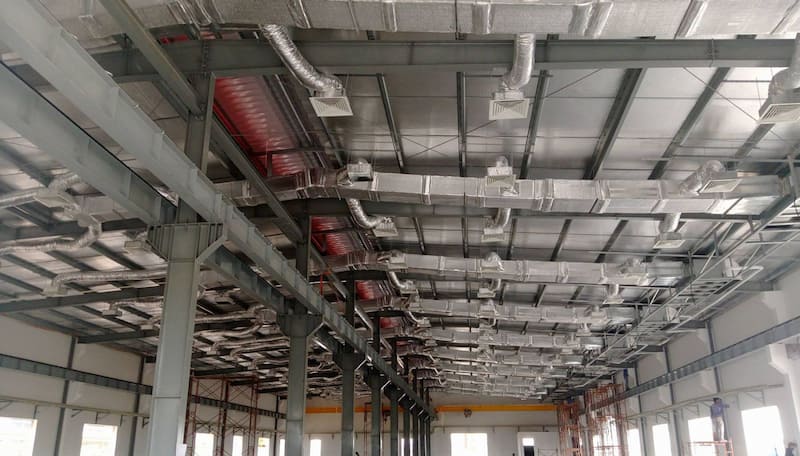
TCXD 232: 1999 Standard on ventilation, air conditioning and refrigeration systems – Fabrication, installation and acceptance. General purpose of manufacturing specifications for air ducts, accessories for ventilation systems, valves, hoods,...; manufacturing air handling parts for humid heat treatment chambers, air filters, sound absorbers, dust collectors...; how to install the gas pipeline, etc. How to test the system and record of sample acceptance.
TCVN 4088:1985 Design standards on climate data in construction design. The aim is to provide location-specific climate data internationally. From there, architects can easily calculate the flow and number of ventilation fans to use.
TCVN 4605: 1988 Design standard on thermal engineering – enclosure structure. The purpose is to provide formulas for calculating standard parameters when designing insulation for containment structures in buildings with specified microclimate conditions.
ASHRAE 2007 (USA) Standard for air conditioners. The purpose is to provide the basic standards at the lowest level on the elements of air filtration, factory refrigeration, air conditioning, etc. However, each country when applying this standard, architects should adjust Adjust or supplement to suit environmental conditions - weather, number of workers in the factory and surrounding terrain accordingly.
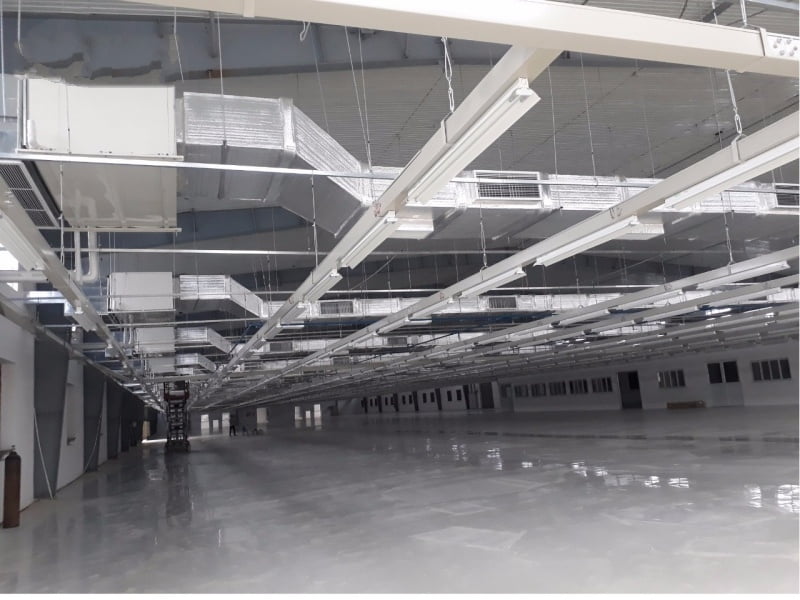
SMACNA (USA): Standard on manufacturing and construction of ventilation systems. The purpose is to guide the connections of the standard air ducts, ensuring the technique. At the same time, the regulations on the size of accessories attached to the duct are introduced, limiting the occurrence of risks and damage to people and property.
BS EN 12101 (UK) standard for stair booster systems. The purpose is to provide calculation methods as well as certain standards and regulations on calculating the amount of smoke to be removed to ensure worker safety, avoid the spread of fire, and protect property of workers. business in the event of a fire.
CP13 (Singpore) Standard on ventilation - air conditioning and fresh air supply for factories. The purpose of providing a standard amount of fresh air to be supplied to the factory in one hour helps businesses quickly choose the most suitable fan. Create the best conditions for workers.
Knowing the regulations on standards before installation requires careful and accurate calculation of the volume of air to be supplied/discharged. The construction will be easier in choosing the right type of ventilation fan.
The formula to determine the total air flow to be provided:
Tg = X*T (m3)
In there:
X: frequency of air change (in one hour)
T: real capacity of the factory = D*R*C
Tg: total air volume to be supplied
It is necessary to carefully calculate the data in each area, to ensure effective ventilation and cooling and to avoid waste. After calculating the amount of wind needed, the enterprise selects a fan with parameter (capacity) ≥ compared to actual demand. Choosing the right type of fan, enough quantity will bring good ventilation effect, while also ensuring noise level, humidity management in the factory.