In the construction industry, ensuring quality and safety is paramount. To achieve this, construction companies not only need experience and expertise but also a construction competency certificate issued by the Ministry of Construction. So why is this certificate so essential?
This article will answer that question by clarifying the role, benefits, and regulations related to competency certificates in the construction field. Let's explore with BIC to understand the importance of this certificate and why every construction company needs to have a construction competency certificate.
A construction competency certificate is a document issued by the Ministry of Construction or the Department of Construction to certify the professional, technical, and operational capabilities of a construction company. This certificate assesses and recognizes that the company meets the necessary conditions, resources, and skills to execute construction projects safely, efficiently, and in compliance with quality standards according to Decree 100/2018/ND-CP, amended from Decree 59/2015/ND-CP.
The competency certificate typically includes information such as the scope of operations, the types of projects the company is allowed to undertake, and the technical standards the company has met. Possessing a competency certificate not only helps a company affirm its reputation and capabilities in the market but is also a mandatory requirement for many construction projects, ensuring compliance with legal regulations and safety standards.
Under current regulations, construction competency certificates are divided into three categories:
- Grade I: Issued by the Construction Management Department under the Ministry of Construction.
- Grade II and III: Issued by the provincial Departments of Construction. The competency certificate is valid throughout Vietnam.
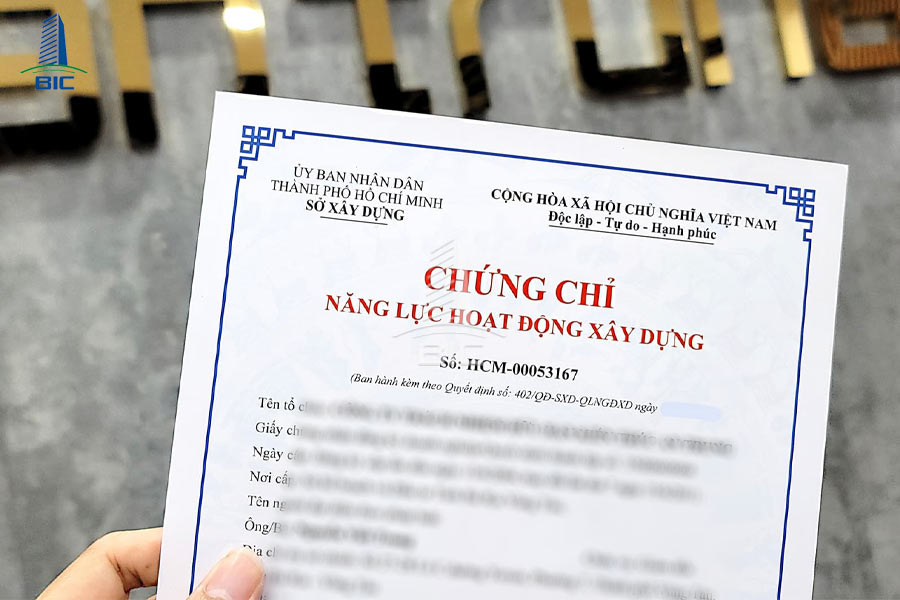
The construction competency certificate brings numerous important benefits to construction companies, helping them establish their position and enhance operational efficiency. Here are some key benefits:
- Enhancing credibility and reliability: The competency certificate demonstrates that the company meets strict technical and safety standards. This builds greater trust in the company's service quality among customers and partners.
- Stronger market competitiveness: With a competency certificate, the company can stand out more easily compared to competitors without such a certificate, thereby increasing opportunities to access large and significant projects.
- Increasing bid-winning chances: Many construction projects, especially large-scale or public sector projects, require contractors to have a competency certificate. This opens up opportunities for the company to participate in and win high-value projects.
- Improving work efficiency and project quality: Adhering to the standards and processes to achieve the competency certificate helps the company enhance its management capabilities, ensuring better project progress and quality.
- Legal compliance: The construction competency certificate ensures the company complies with legal regulations in the construction industry, avoiding legal risks and ensuring stable business operations.
The construction competency certificate is issued based on specific standards and requirements to ensure that a construction company has the capability to effectively and safely execute construction projects. Here are the main standards that need to be met:
- Financial capability: The company must demonstrate stable financial capacity sufficient to undertake construction projects. This includes providing financial reports, assets, and other related documents.
- Technical and technological capability: The company needs to have adequate equipment, technology, and advanced management systems to ensure project quality and progress. Additionally, completed projects are considered to evaluate the company's technical capacity.
- Personnel: The company must have a team of skilled and experienced engineers and workers. Certificates and qualifications of key personnel are also an important criterion.
- Experience and achievements: The construction projects that the company has completed and the results achieved are crucial factors in evaluating its capacity. These projects must meet quality and safety standards.
- Legal and standard compliance: The company must comply with legal regulations and technical standards in the construction industry, including labor safety, environmental protection, and other relevant regulations.
Authorized organizations such as the Construction Management Department under the Ministry of Construction and provincial Departments of Construction will evaluate and issue competency certificates based on these standards. The construction competency certificate not only confirms the company's capacity but also serves as a basis for partners and clients to evaluate and select suitable contractors.

The approval process for the construction competency certificate for construction companies typically includes the following detailed steps:
- Company information: The company needs to provide basic information such as company name, address, tax code, and contact details of the legal representative.
- Legal documents: Including notarized copies of the business registration certificate, investment certificate (if any), and other legal documents related to the company's construction activities.
- Technical certificates: The company must provide certificates of technical adequacy, occupational safety, and environmental protection as required.
- Financial reports: Financial reports of the company for the last 3 years, audited and confirmed by the tax authority.
- Experience dossier: A list of completed construction projects, including detailed information on scale, value, execution time, and results achieved. Accompanied by construction contracts, acceptance minutes, and quality certificates of the projects.
- Where to submit: The company submits the dossier to the competent state management agency, such as the Construction Management Department under the Ministry of Construction or the provincial Department of Construction where the company is registered.
- Processing time: The processing time for the dossier usually ranges from 30 to 45 working days, depending on specific regulations of each agency.

- Regular inspections: After submitting the dossier, the management agency will conduct regular inspections at the company. This includes evaluating the company's activities, registered services, and compliance with technical and safety regulations.
- Annual inspections: Regular inspections usually take place annually to ensure the company maintains its capacity and quality of operations.
- Detailed assessment: After the inspection, the management agency or the assigned functional unit will conduct a detailed assessment of the company's operational capacity. This includes evaluating the dossier, documents, and actual inspection results at the company.
- Interviews and equipment checks: The assessment may also include interviewing key personnel and checking the equipment, machinery, and technology used by the company.
- Decision to issue: If the company meets all the standards and requirements, the management agency will issue the Construction Competency Certificate. This certificate confirms that the company has the capacity to execute construction projects according to legal regulations and technical standards.
- Certificate validity: The competency certificate is valid for a specific period (usually 5 years). After the validity period expires, the company must re-register and undergo the approval process to renew the certificate.
Preparing a complete and accurate dossier from the beginning will facilitate a smoother approval process. Companies should contact the management agency for detailed guidance on the requirements and standards to be met.
Construction companies need to possess a construction competency certificate to confirm that contractors have the capacity to execute construction projects according to standards and ensure quality. This certificate also ensures that projects will be completed on schedule.