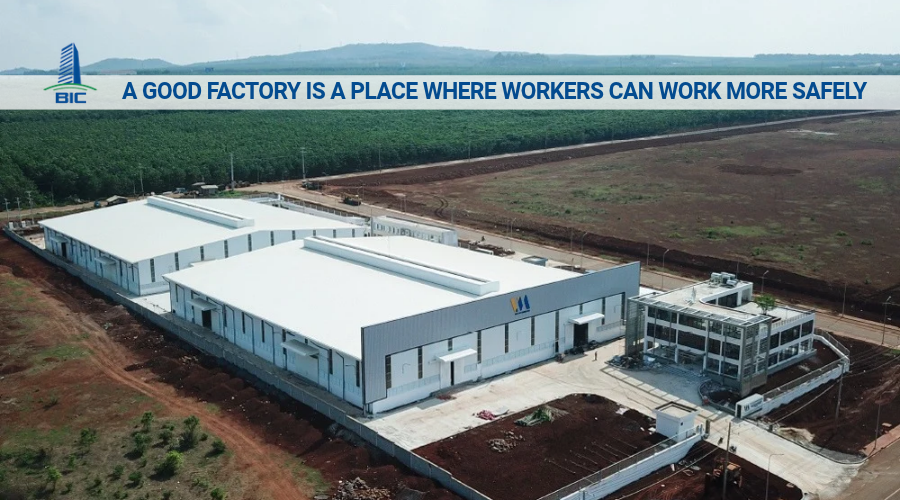
When deciding to invest in a new factory, many businesses are often guided by the mindset of “bigger is better.” Numerous investors are willing to spend significantly more to increase floor area, viewing it as a long-term safeguard for future expansion and production growth.
However, in today’s industrial economy, does a larger facility truly translate into greater profitability?
Operational realities from many industrial factory projects reveal a harsh paradox: excess square meters not only tie up valuable working capital in unused spaces, but also create a series of hidden costs that gradually erode profit margins—from energy consumption and maintenance expenses to reduced efficiency in internal logistics.
It is time for business leaders to adopt a different strategic perspective. An ideal factory does not simply need to be large; it needs to be right. “Right” means a facility that is carefully tailored through professional construction design, seamlessly integrated throughout the design-build process, and optimized according to the actual production workflow.
In this article, BIC explores this fundamental issue in depth, helping investors rethink their factory design strategy and make smarter construction decisions that transform production space into an effective financial asset for the business.
To avoid the trap of oversized facilities, investors must first understand what truly defines an efficient industrial building. In industrial construction, suitability and operational performance always take priority over sheer size. The concept of “right” is built upon three essential pillars.
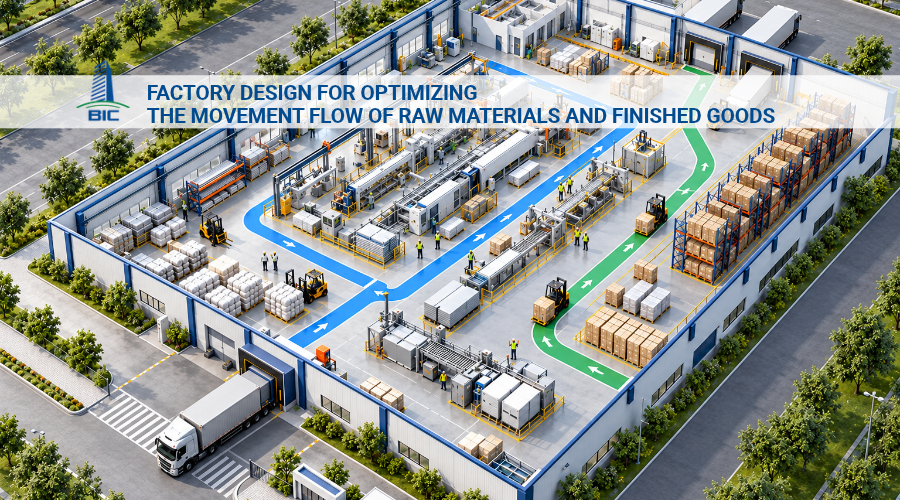
The size of an industrial factory should never be determined by assumptions or rough estimates. Instead, the entire layout should be tailored to the production process, machinery arrangement, and actual workflow of the business.
- One-way material flow: An optimized layout allows raw materials, work-in-progress products, and finished goods to move through a continuous and logical path. This eliminates traffic conflicts and unnecessary backtracking that can disrupt internal logistics.
- Optimized working space: The distance between machine clusters, operator workstations, and forklift pathways must be carefully balanced. The workspace should not be too cramped, compromising safety, nor excessively large, causing wasted movement and reduced efficiency.
Every manufacturing industry has unique operational requirements. Therefore, factory design must accurately address the technical needs of each business rather than applying a one-size-fits-all solution.
- Load capacity and clear height: The factory floor must be designed to support machinery loads and high-rack storage systems. Likewise, the building’s clear height should align with natural ventilation requirements or centralized HVAC systems.
- Appropriate material selection: A metal fabrication facility may require heavy-duty crane beams and impact-resistant concrete flooring, while an electronics or pharmaceutical factory may require anti-static epoxy flooring and cleanroom panel systems to control dust and contamination.
A successful factory must first and foremost be a legally compliant one. Proper planning and design from the outset help businesses avoid legal complications and operational delays.
- Compliance with building density and setback regulations: The facility must meet industrial park requirements regarding building density, environmental safety distances, and technical infrastructure corridors.
- Critical systems: Fire protection systems, wastewater collection, and treatment systems must comply with regulatory requirements and pass all inspections before project completion and handover.
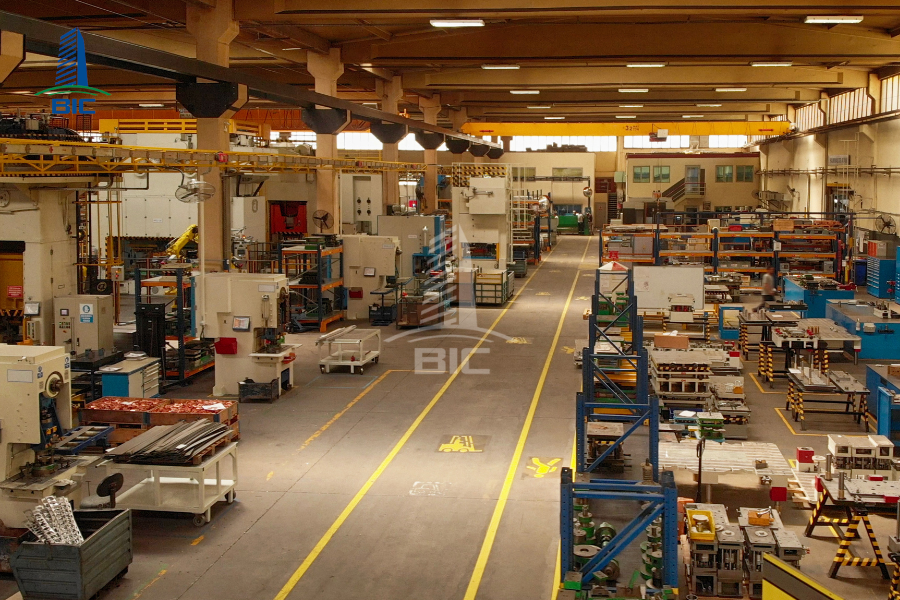
Many business owners equate larger facilities with greater corporate prestige. However, pursuing excessive floor area without careful functional planning can lead to financial and operational burdens that become apparent as soon as the factory begins operating.
Every unnecessary square meter on a drawing represents more than just empty space. It requires foundations, pre-engineered steel structures, roofing systems, lighting, flooring, and numerous supporting components.
- Higher construction costs: Unnecessary floor area significantly increases factory construction costs. Capital that could otherwise be invested in production equipment, technology upgrades, or working capital becomes locked into unused infrastructure.
- Increased opportunity costs: Money tied up in underutilized space delays the project’s return on investment and extends the payback period.
One of the biggest flaws of the “bigger is better” mindset is focusing solely on construction costs while overlooking long-term operating expenses.
An oversized industrial factory continuously drains company resources through hidden operational costs:
- Higher energy consumption: Lighting, ventilation systems, and cooling equipment must cover the entire facility, including areas that are rarely used, leading to unnecessarily high utility bills.
- Reduced labor productivity: Excessive travel distances for employees and forklifts increase wasted movement time, slowing production activities and lowering overall efficiency.
When facility size exceeds the practical management capacity of personnel, maintaining a safe and secure working environment becomes significantly more difficult.
- Creation of blind spots: Large unused areas can become difficult-to-monitor zones, increasing security risks and complicating fire prevention efforts.
- Higher staffing requirements: Larger facilities often require additional security personnel, warehouse managers, and safety supervisors, increasing administrative overhead.
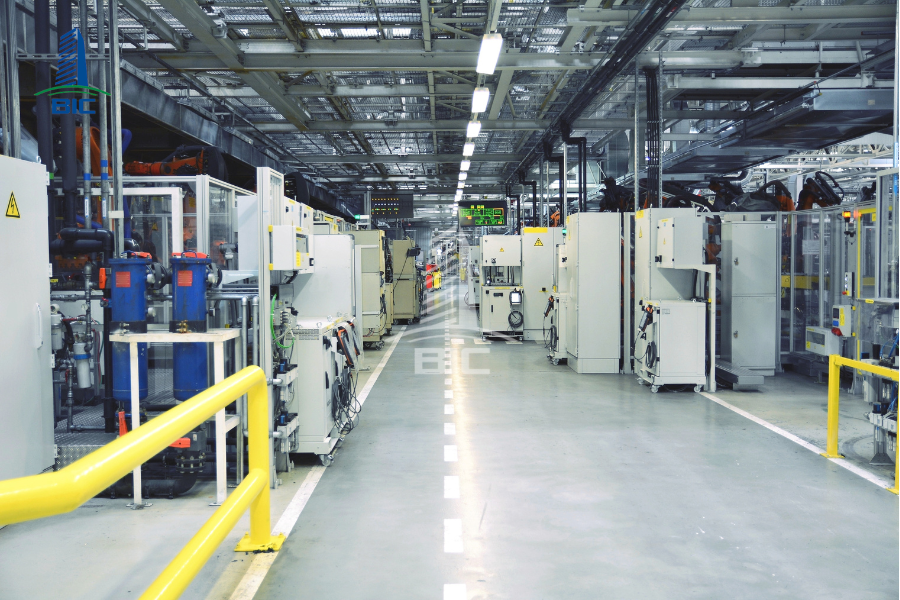
Most construction problems originate from poor planning rather than on-site execution. Achieving a facility that is both functional and cost-efficient requires serious investment during the design phase.
Many business owners underestimate this stage and focus solely on moving quickly into construction. In reality, more than 70% of cost optimization opportunities are determined during the design phase.
- Constructive technical consultation: Experienced consultants do more than simply follow client instructions. They analyze operational requirements, challenge assumptions, and recommend more efficient solutions based on real-world data.
- Integrated planning approach: Skilled professionals understand the relationship between architecture, structure, and MEP systems. Thorough coordination at this stage eliminates costly conflicts and modifications during construction.
Building the right-sized facility does not mean sacrificing future growth opportunities. The most effective solution is phased development through modular planning.
- Designed for current requirements: The initial facility should be optimized for existing production demands, ensuring maximum utilization of every square meter.
- Smart future expansion: Instead of constructing an oversized building from day one, the design can incorporate provisions such as expansion-ready foundations, utility corridors, and structural connections. When growth occurs, additional sections can be added quickly without disrupting existing operations.
In modern industrial construction, pre-engineered steel buildings (PEBs) have become the preferred solution for creating highly efficient production facilities.
- Large clear-span capabilities: PEB systems allow wide column-free spaces, providing maximum flexibility for machinery arrangement and future layout modifications.
- Speed and precision: Structural components are engineered, fabricated, and quality-controlled in factories before delivery to the site. This significantly shortens construction schedules while ensuring superior accuracy and material quality.
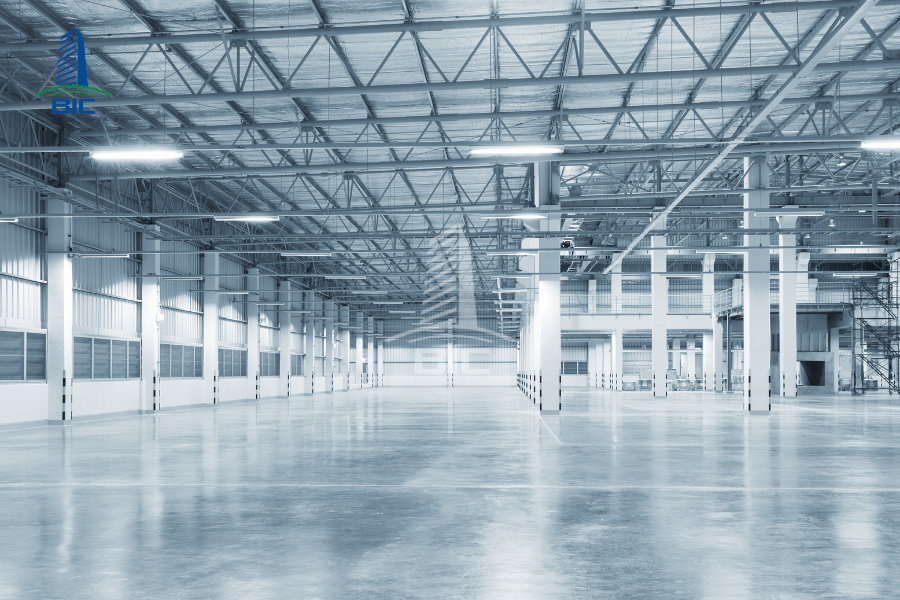
Even the most sophisticated design remains theoretical unless executed correctly on-site. Achieving the intended performance requires complete alignment between design and construction teams.
Many projects still involve one company handling design and another handling construction. This approach often creates significant communication gaps.
- Implementation discrepancies: Architectural concepts may prove impractical during construction, leading contractors to alter details and compromise the original design intent.
- Responsibility disputes: When structural issues or cost overruns occur, disagreements between designers and contractors are common, leaving the investor to absorb the consequences.
To eliminate these issues, many industrial investors now prefer the Design-Build model.
- Single point of accountability: From conceptual planning and engineering design to procurement and construction, one contractor assumes responsibility for the entire project lifecycle.
- Faster schedules and better cost control: Integrated project delivery eliminates delays between project phases and allows earlier procurement planning, reducing overall project duration by approximately 15–25% while minimizing financial risks.
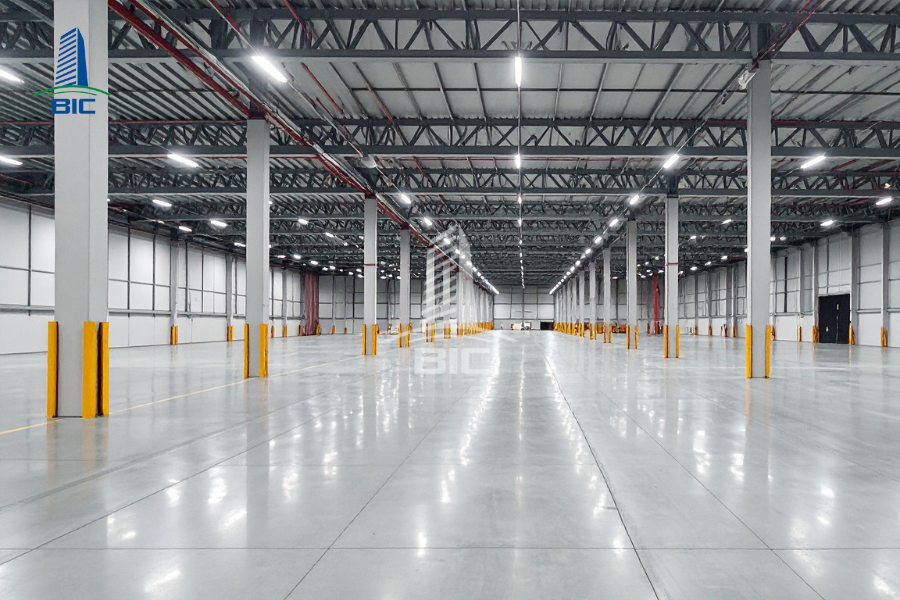
Selecting the right contractor is essential for achieving a facility that is truly optimized.
An experienced contractor demonstrates expertise from the first meeting. Rather than simply recording requirements, they analyze production workflows and propose layout, structural, and ventilation improvements. Contractors who focus on operational efficiency instead of merely discussing building size are often the most valuable partners.
Transparency protects investment capital. Investors should request detailed quantity takeoffs and technical specifications rather than relying solely on total project costs.
A professional proposal clearly identifies material specifications, roofing thickness, coating systems, and structural parameters. This transparency reflects careful planning and reduces the risk of unexpected costs.
Legal compliance cannot be compromised. A reputable contractor must understand current regulations regarding environmental safety distances, fire protection requirements, and industrial building standards.
This expertise helps investors navigate approvals and inspections efficiently, ensuring the facility receives all necessary certifications and can begin operations on schedule.
A large factory only creates value when it is supported by a precise and well-planned development strategy. Wasted space is not merely a construction issue—it is one of the most damaging forms of long-term inefficiency, quietly reducing cash flow and operational performance.
The key to avoiding this problem lies in investing seriously in factory design and ensuring complete integration throughout the project delivery process. Rather than seeking the lowest-cost contractor to build excessive floor space, investors should focus on finding a strategic design-build partner capable of creating a production environment that is efficient, optimized, and sustainable for long-term growth.