Industrial factory design has become familiar in the construction of factories, warehouses, industrial buildings, and civil works. The use of steel structures offers many benefits for businesses. To ensure that the project is beautifully and solidly designed according to standards, let’s refer to BIC's steel structure design process for industrial buildings!
The first step in this process is to conduct a survey and propose construction plans. The construction team will visit the site to check the location and layout, then suggest suitable factory design options. Next, architects and technicians will discuss and propose technological solutions and technical infrastructure to ensure a reasonable construction process.
The construction unit will propose optimal architectural solutions for areas requiring high design standards such as offices, security areas, and other functional areas. Then, the design team will review and optimize environmental protection and fire prevention solutions according to state regulations and the standards of the industrial park or cluster where the project takes place.
Finally, foundation structure solutions will be designed to match the geological conditions of the construction area. Major construction standards and regulations will be identified and applied during the factory design process to ensure the project's safety and durability.

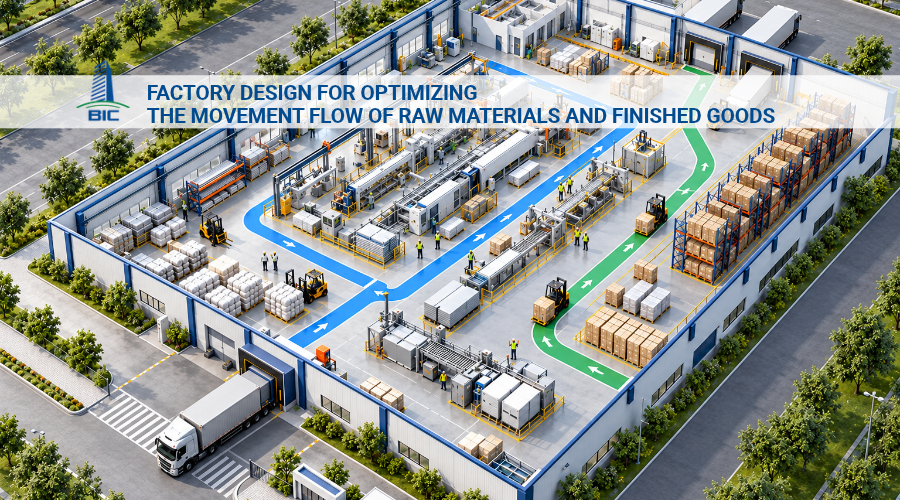
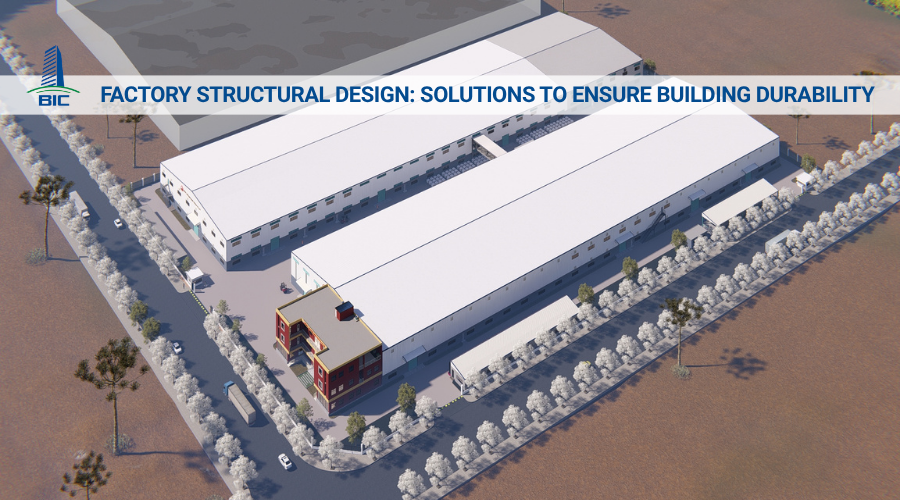
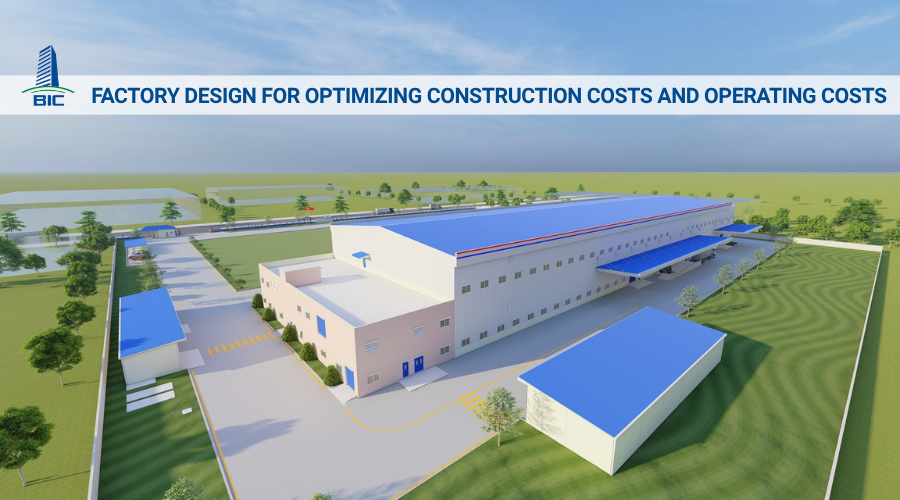
The preliminary factory design drawing is created after the investor has surveyed and selected a suitable geographical location. Architects and engineers will provide construction plans and concretize ideas with a layout drawing of the entire site according to the selected location. The preliminary drawing should depict the layout of each item and a 3D perspective of the factory.
Depending on the production field, technology line, and scale of each business, the factory design may vary. The drawing needs to clarify the items to be constructed in the project, construction density, construction boundary, internal road system, green density, fire prevention system, and escape system.
The preliminary design drawing will include the following elements:
General layout drawing of the entire project (for linear projects, this is a topographical route plan drawing).
Technological process diagram or architectural solution.
Main structure drawings and related systems.
Construction drawing design is a crucial foundation for the investor and the construction unit to discuss and reach a final agreement on the construction plan. Detailed factory design drawings will be completed from the preliminary drawings by a professional team of engineers and architects.
The construction drawing will be detailed and specified based on survey documents and cost estimates. This design not only fully represents technical parameters, structural details, and materials that comply with state standards and regulations but also ensures maximum feasibility when implemented.
At this stage, the factory design drawing will specifically detail all construction items, from architectural structural details to foundation structure plans, prefabricated steel frame drawings, connection points, specifications for materials, M&E drawings, fire prevention, and escape systems for the following items:
- Production area
- Warehouse
- Office area
- Dining room, canteen, and rest area for staff
- Underground tank
- Electrical substation
- Parking lot, security house
- Gate, fence system
Simultaneously with completing the detailed construction drawing, the investor also needs to apply for construction permits and fire prevention permits. On the contractor's side, the construction team will prepare a cost estimate, detailing each task and the specific volume of work required for all items. The file, including the construction drawing and cost estimate, will be the basis for evaluating the construction work and the volume of work completed later.

Before proceeding with the factory construction steps, the construction unit must ensure the receipt of materials according to the required quantity and quality in the construction estimate, including steel, corrugated iron, bricks, cement, etc. With a large volume of materials, inaccuracies in the delivered quantity or inconsistency in types are likely, especially for small materials like bolts and screws.
Careful inspection upon receipt and proper storage of materials are crucial. Besides careful inspection upon receipt, the construction unit must ensure safe transport and storage of materials. Materials must not be worn, damaged, or rusted before construction, as material quality degradation will severely affect the overall quality of the project.
Factory floor construction is a critical step in the construction process, as the foundation determines the durability of the entire project. To ensure quality and stability, the factory floor construction process must be carried out carefully and adhere to the following steps:
- Ground leveling: Depending on the current condition of the ground, the contractor will carry out leveling work appropriately. This work aims to create a stable and flat ground surface, preparing for the next construction steps.
- Axis positioning: This is an important step to accurately determine the position of the column foundation axes according to the factory design drawing. The axis is the basis for constructing the column foundation and ensures accuracy throughout the construction process.
- Fence foundation excavation: With the large area of the factory, the surrounding fence system needs to be built firmly. Fence foundation excavation ensures that the fence will have a solid foundation, withstanding environmental impacts and time.

- Foundation and girder construction: This step includes foundation construction and piling based on the determined axis positions. Factory foundations are usually made of reinforced concrete, designed as single foundations or pile foundations to ensure stability and durability.
- Ground compaction: After completing the foundation, the ground will be leveled and compacted to the required density in the design drawing. This work helps ensure that the ground is hard and stable, not subsiding when bearing the load of the project.
- Stone foundation compaction: A layer of stone foundation is spread over the compacted ground, ensuring the required thickness and density. This stone foundation layer helps distribute the load evenly and increases the bearing capacity of the foundation.
- Factory floor construction: After completing the preparation steps, the construction unit will install reinforcement and pour concrete for the factory floor. This step needs to be carried out accurately and meticulously to ensure the factory floor is durable, capable of bearing heavy loads, and sustainable over time.
Implementing the above steps correctly and thoroughly not only ensures the project's quality but also minimizes risks and incidents during future use.
Steel frame construction is a crucial and complex stage, considered the backbone of the factory. Therefore, the contractor must ensure the firmness, accuracy, and load-bearing capacity of the steel frame. To achieve high accuracy when installing the steel frame, construction units must use modern measuring equipment such as theodolites and laser projectors.
The factory steel frame includes two main parts:
- Installing iron frames and steel columns: The iron frames and steel columns are prefabricated at the factory, then transported to the construction site. Depending on the layout, the construction unit will install the frames and columns from the middle out to both ends or from one end inward. This process requires high accuracy to ensure the steel frame is installed in the correct position without deviation or tilting.
- Installing purlins and braces: After completing the iron frames and steel columns, the construction team will proceed to install the bracing system to ensure stability outside the plane frame and the purlin system to increase the stability of the steel frame and support the roofing sheets. This entire system needs to be installed accurately without shifting so that subsequent stages can be implemented correctly.
The steel frame construction process requires meticulousness and precision from preparation to installation. Accuracy in each step not only ensures the safety of the project but also affects the factory's lifespan and load-bearing capacity.

After completing the steel frame, the construction unit will proceed to the next important step: roofing the factory. Like the steel frame system, installing the first roofing sheet requires very high accuracy because it will be the reference point for the subsequent sheets. Upon completing the roofing, the roofing sheets must meet the requirement: the overlapping joints of the sheets must always be on a straight line and perpendicular to the purlins.
In addition to accurate roofing, the contractor must also calculate the heat resistance solution for the factory roof. To resist heat, an additional layer of insulation material will be installed, helping to limit hot and cold air from entering the production area. This insulation layer must meet technical standards, not be wrinkled or stretched, with a flat, smooth underside without creases, and with straight joints.
The factory roofing process includes the following steps:
- Installing the first roofing sheet: Ensuring accuracy to create a reference point for the subsequent sheets.
- Installing subsequent sheets: Ensuring that the overlapping joints are always on a straight line and perpendicular to the purlins.
- Heat resistance: Installing an additional layer of insulation material, ensuring straight joints, without wrinkles or stretching, and a smooth underside without creases.
The factory roofing process not only requires precision in each step but also demands meticulousness and professionalism in installing the insulation layer. Thoroughness in each detail will help ensure the project's quality, creating optimal production conditions for the business.
The outer walls and internal partitions of the factory can be built using materials such as corrugated iron, bricks, etc. This stage needs to align with the design and match the steel frame structure in the factory construction process.
Although it does not require the same high accuracy as installing corrugated iron roofs, constructing the outer walls and internal partitions of the factory must consider safety solutions: fire resistance, wind resistance, dust resistance, etc. Partitions can be made from fire-resistant and insulating materials such as Smartboard panels, Gywall gypsum panels, etc.
The steps to construct surrounding walls and internal partitions of the factory include:
- Selecting materials: Choosing appropriate construction materials such as corrugated iron, bricks, Smartboard, Gywall gypsum panels, etc.
- Constructing the outer walls: Building the surrounding walls of the factory, ensuring it matches the steel frame and initial design.
- Installing internal partitions: Constructing internal partitions in the factory using fire-resistant and insulating materials to ensure safety and efficiency.
- Installing doors, windows, and ventilation: After erecting the partitions and walls, the construction unit will install doors, windows, ventilation openings, etc.
- Finishing check: The construction unit will check the entire factory for any incomplete or improper details and promptly fix them.
The process of constructing surrounding walls and internal partitions requires attention to details and alignment with the overall design and structure of the factory. Thoroughness and accuracy in each step will help ensure the project's quality and safety, creating an optimal production environment for the business.

M&E system installation is an essential step to ensure the factory operates smoothly and efficiently. This process includes the installation of electrical systems, water supply and drainage systems, fire prevention systems, ventilation systems, and other auxiliary equipment.
Installing distribution boards and electrical equipment: Ensuring the power distribution and supply to each area in the factory is safe and efficient.
Testing and commissioning: Testing the electrical system and ensuring it operates correctly and safely before putting it into use.
Installing drainage pipes: Ensuring the drainage system operates smoothly and meets environmental and safety standards.
Testing and commissioning: Testing the water supply and drainage systems to ensure they operate correctly and efficiently before putting them into use.
Installing fire suppression systems: Ensuring the fire suppression system operates efficiently and can extinguish fires quickly and effectively.
Testing and commissioning: Testing the fire prevention system to ensure it operates correctly and efficiently before putting it into use.
Installing air conditioning and heating systems: Ensuring the factory's air conditioning and heating systems operate efficiently and meet the requirements for temperature control and comfort.
Testing and commissioning: Testing the ventilation system to ensure it operates correctly and efficiently before putting it into use.
The final step in the factory construction process is the handover and completion phase. This step involves conducting a comprehensive inspection of the entire factory to ensure that all construction, installation, and finishing tasks have been completed according to the design and specifications.
During the handover process, the construction unit and the investor will conduct a thorough inspection of all areas and systems in the factory. This includes checking the quality of the construction work, the accuracy of the installations, and the functionality of all mechanical and electrical systems.
Any defects or issues identified during the inspection will be promptly addressed and rectified by the construction unit. Once all issues have been resolved and the factory meets all quality and safety standards, the construction unit will hand over the completed project to the investor.
The handover process includes the following steps:
- Comprehensive inspection: Conducting a thorough inspection of the entire factory to ensure all construction and installation tasks have been completed according to the design and specifications.
- Rectifying defects: Addressing and rectifying any defects or issues identified during the inspection.
- Final approval: Obtaining final approval from the investor and relevant authorities, ensuring the factory meets all quality and safety standards.
- Handover: Officially handing over the completed project to the investor, including all necessary documentation and certifications.
Implementing strict quality control and assurance measures throughout the construction process helps ensure that the project meets all quality and safety standards. This includes regular inspections, testing, and monitoring of materials, workmanship, and installations.
By considering these key factors and following a systematic and well-organized approach, businesses can ensure the successful design and construction of their industrial factories, resulting in a high-quality, durable, and efficient facility that meets their operational needs and goals.