Building a food factory compared with other types of factories needs to meet stricter and stricter standards for reasons of food safety as well as business licensing.
The standards set forth for the construction of a food factory comply with HACCP/ISO 22000 standards. Together with the BIC construction contractor, they will update more useful knowledge and be more confident when implementing the design and construction of the food factory. noteworthy
For a factory to serve the food processing industry, the location of the factory is quite focused. First, it is necessary to check the geology and soil carefully and carefully consider the sources of potential risks of contamination affecting food.

The location of the food factory should have an adequate supply of clean water and be convenient for transportation. It is absolutely not advisable to build food factories on plots of land that do not have the ability and measures to thoroughly handle threats to food hygiene.
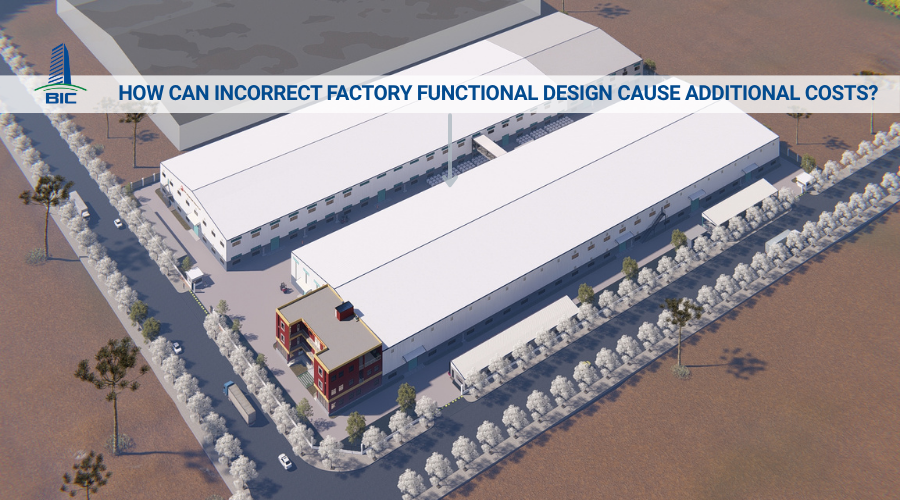
Usually, a food factory consists of two main areas: production and ancillary areas. The production area should be reasonably located away from places such as:
+ Areas of polluted environment, industrial and daily activities where food is likely to be contaminated.
+ Places flooded, lowland or stagnant water
+ Places prone to harmful organisms affecting food production and storage
+ A place where solid and liquid wastes cannot be disposed of and are effectively treated.
The internal roads in the production workshop need to ensure hygiene standards on the drainage system, which is closed and does not cause environmental pollution.
The production area and the food processing area must be designed on a one-way principle, separate from the receiving of raw materials to the final finished product, optimizing time to improve productivity and ensure food safety.
Food storage and preservation facilities need to be designed in accordance with the requirements of each type of food and avoid the entry of moldy animals and insects. The design of the food factory must be suitable for the machinery and technology and the type of food to prevent cross-contamination between different foods or between the stages of production, processing and food handling.

Factory ceilings should use light colors and use materials that are waterproof, not cracked, resistant to mold, water, and dirt.
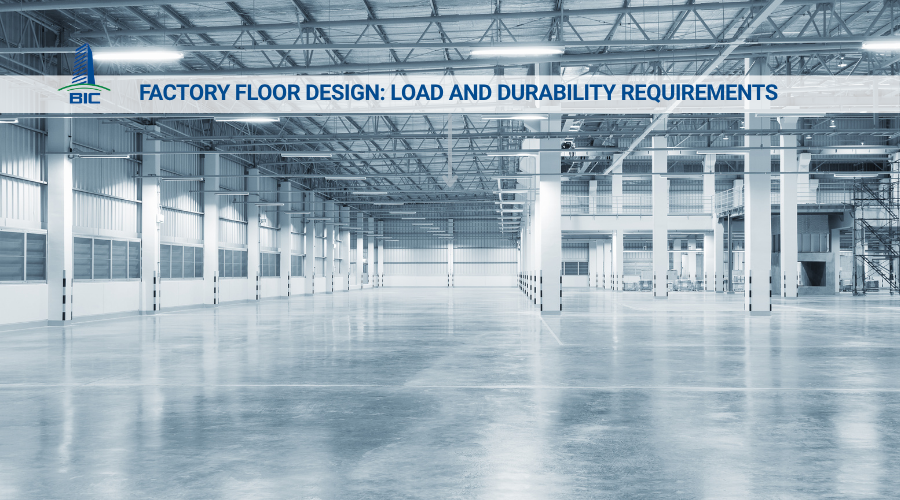
The factory floor uses light colors made of non-slip waterproof material that is easy to clean, clean, disinfect, and easy to drain.
Factory walls are also painted and glued more carefully than other types of factories, which are flat and not waterproof, and the edges need to be rounded.
The door is firm, flat, waterproof, automatically opens and closes, disinfects clothes and shoes when entering and leaving the food production area. The design of protecting the entry of insects or animals.
Areas in direct contact with food need to be built solidly, flat, impervious to water, not eroded, disinfected under normal conditions.
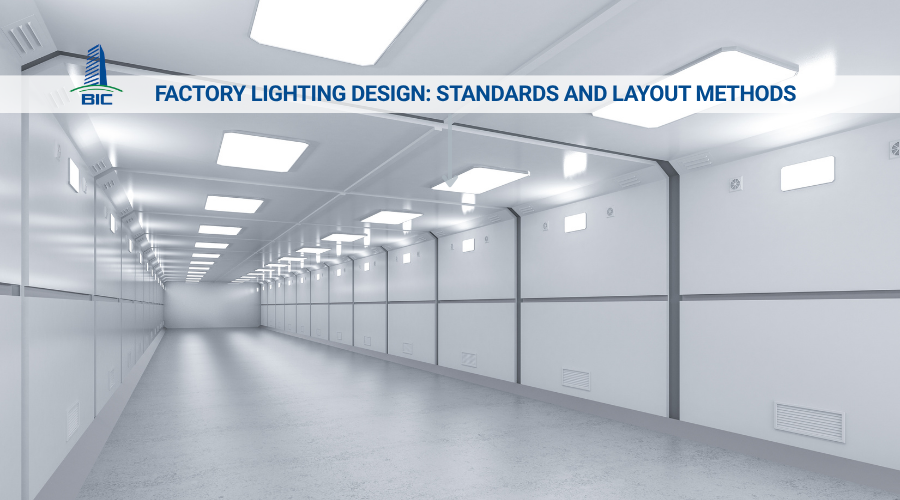
The lighting system must provide enough light for the factory to function properly, and enough light everywhere in the factory. The intensity must be suitable for workers who are working in the production process. Lighting equipment should be shielded to prevent the device from being burned in the event of an explosion.
Ventilation: Depending on the sound quality of the processed food, avoid air or condensation. Using non-rust materials that are easy to clean and repair
Waste containers should be made of materials that are less susceptible to damage, covered with tight-fitting lids, and cleaned regularly
Items containing inedible hazardous substances must have prominently designed signs for easy identification and lock protection.
Water supply and drainage system: Attention should be paid to ensuring water sources for the production process at the factory, and at the same time limiting waterlogging. Especially for food factories that strictly meet the following standards:
Water supply and drainage systems must have storage facilities that control water temperature to ensure safety to meet the needs of food production and processing.
The water source must be clean to meet the standards of water hygiene and safety for drinking and daily life promulgated by the Ministry of Health.
If the factory uses return water, it needs to be treated and maintained to meet the safety factor without contaminating food.
Steam supply system
The steam supply system must be designed to meet the following requirements:
Use clean water that is not harmful to humans
+ Design separate pipes with different paint colors such as steam production, cooling or water source for fire prevention...
+ The water supply system is not connected to the water system used for food production and processing
Ice water supply system
Clean water source and ensure hygienic transport and storage according to regulations of the Ministry of Health on water for drinking or food preservation.
Compressed air
For food production factories, when designing, it is necessary to ensure that the compressed air must be clean, safe, and not contaminate food.
Waste water treatment system
Design and arrange a reasonable waste disposal system in the factory to avoid the danger of contaminating food or affecting water sources. Design a separate door to collect waste.
Toilet
Toilets in food production workshops must meet the following requirements:
On average, at least 25 gnuwoifs must have 1 fully furnished toilet arranged in a convenient location for easy access by workers.
The separate location does not affect the food processing and storage area
Fully equipped with sanitary equipment, lighting, ventilation, water supply and drainage systems to remove waste in the most hygienic way
In the toilet, there is a wash basin, hand washing detergent solution with instructions for washing hands when leaving the toilet in an easily visible position.
For more information or need consultation, quote design - construction of pre-engineered steel buildings, please contact us - BIC- PRESTIGE CONTRACTOR IN VIETNAM. We will support free consultation, on-site survey and answer the fastest questions for customers.
BIC has participated in many construction projects across the country. We have had a lot of experience in building large-scale projects of famous investors from countries around the world such as: Japan, Korean, Taiwan, America (USA), Singapore, .. ..
BIC's reputation is increasingly strengthened when we are known more and more through compliments for our professional working attitude, seriousness, market-oriented spirit and honesty in business.
BIC is now a trusted brand for big-name investors in the Vietnamese market.
BIC hopes that with this article, you will have a better overview of ventilation fans. Good luck!
=======================================================================================================
BIC CONSTRUCTION ARCHITECTURAL JOINT STOCK COMPANY
Ho Chi Minh Branch: 7th Floor, Gia Dinh group, 566 National Highway 13, P.Hiep Binh Phuoc, Thu Duc District, Ho Chi Minh City
☎️ Hotline: 0908950546
Mail marketing: marketing@bicons.vn
Hanoi Branch: 4th Floor, HUD3 Tower, No. 121-123 Pho To Hieu, Ha Dong District - Hanoi.
☎️ Hotline: 0243.91.92.789
Mail: bic@bicons.vn - Fax: (028) 38 800 892