Natural ventilation is an important factor in factory design, helping to ensure fresh, airy air and improve the working environment. A natural ventilation system is an energy-saving solution that optimizes operating costs while still ensuring high efficiency. Applying appropriate ventilation methods ensures a comfortable working space and increases labor productivity.
So, what are the common natural ventilation solutions in factory design? Let’s explore this in detail with BIC in this article!
What is natural ventilation?
Natural ventilation is a method of air circulation in a space without the need for fans or mechanical systems. Instead, this system utilizes temperature differences and wind direction to create a flow of air, helping to remove hot air, dust, and provide cool air inside.
This method is widely applied in factory design, residential buildings, and energy-efficient research offices, reducing operating costs and protecting the environment.
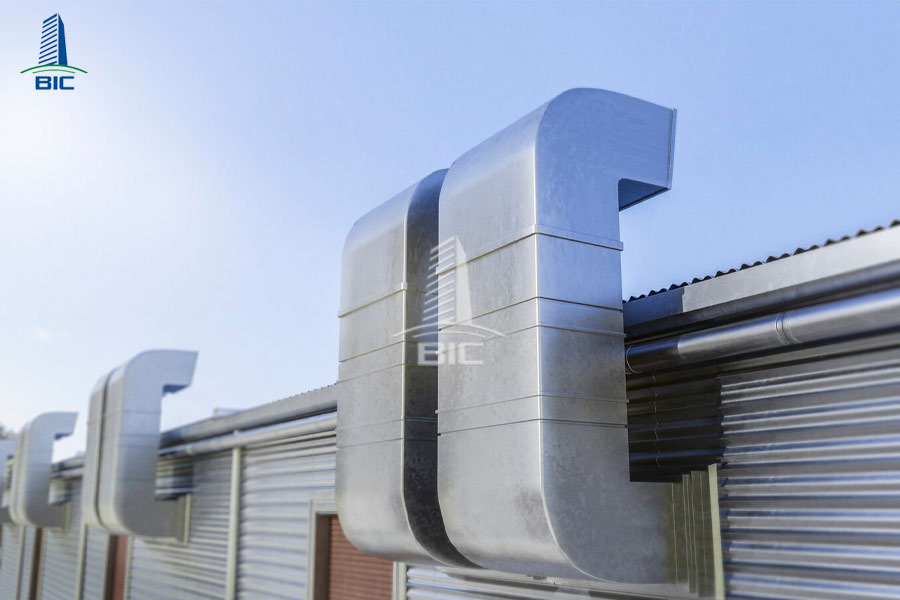
Natural Ventilation Solutions in Factory Design
Below are some common natural ventilation solutions in factory design:
Unidirectional Ventilation
Unidirectional ventilation is a method that uses only one side of the building to draw in air and exhaust it outside. This solution is often applied when the process only has one side exposed to the outside environment or is limited in space, making it impossible to design a cross-ventilation system.
However, due to the lack of robust air storage measures between spaces, this method results in minimal air circulation, providing cooling and conditioning effects that are less effective compared to other methods. To enhance efficiency, engineers often combine this approach with large windows, shutters, or fans to help increase airflow into the interior.
Cross Ventilation
Cross ventilation is the optimal method in factory and building design, facilitating natural airflow by drawing in air from two opposite or adjacent sides. When air circulates within the space and exits in the opposite direction, it creates continuous convection, helping to remove hot air, dust, and provide a source of cool air.
This solution is particularly suitable for tropical climates, where high temperatures and hot air can affect work performance. By designing an effective system of windows, ventilation openings, or partition walls with gaps, cross ventilation helps reduce indoor temperatures, improve air quality, and save energy efficiently.
Vertical Ventilation
Vertical ventilation is a method that takes advantage of temperature differences to create natural air convection. Cold air from outside is brought in at a lower position, then absorbs heat from the interior and exits through skylights or high ventilation openings.
This system works most effectively in high-rise buildings and central atrium factories, where hot air can easily rise and escape. It is also a useful alternative when cross-ventilation cannot be applied. However, for vertical ventilation to function well, the indoor temperature needs to be higher than the outdoor temperature, which may render this method ineffective under certain conditions.
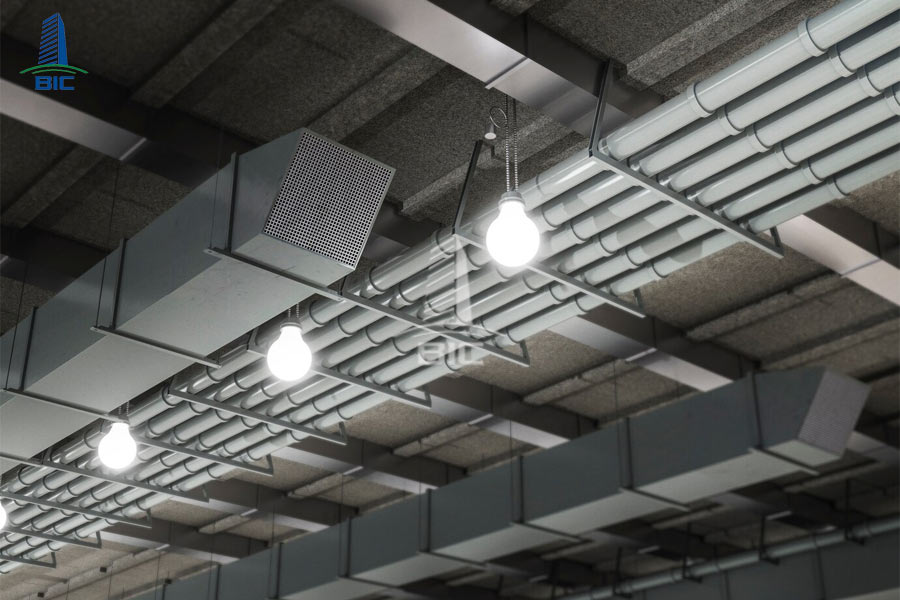
Chimney Effect
The chimney effect is the phenomenon where air automatically rises, creating pressure and temperature differences between the floors in a factory. Cold air from outside, having lower pressure, enters from below, while warm air inside is pushed up and escapes through vents, exhaust openings, or ductwork.
This method is particularly effective in high-rise buildings where there are no open floors or skylights to facilitate continuous airflow. As a result, the technology consistently provides clean air, reduces heat buildup, and enhances natural cooling efficiency without the need for excessive fans or air conditioning.
Note when installing the ventilation system in factory design
The design and layout of the natural ventilation system in factory play a crucial role in providing fresh air, protecting the health of workers, and maintaining the conditions for storing goods and equipment. This system is often combined with industrial fume and dust extraction systems to optimize air cleaning capabilities.
To ensure high efficiency when installing the natural ventilation system, the following factors should be considered:
1. Pay attention to the installation location, number of fans, and capacity
- The location of the ventilation fans should be arranged appropriately, avoiding placement at head height or in areas with heavy activity to prevent health impacts.
- Fans should be positioned in high locations and areas with less foot traffic to optimize operations and increase air circulation efficiency.
2. Choose an appropriate ventilation system
- If the factory is located in a cool, breezy area, industrial exhaust or ventilation fans can be used to ensure continuous air circulation.
- For factories situated in high-temperature areas, it is advisable to combine with a sound cooling system to regulate temperature and maintain a comfortable working environment.
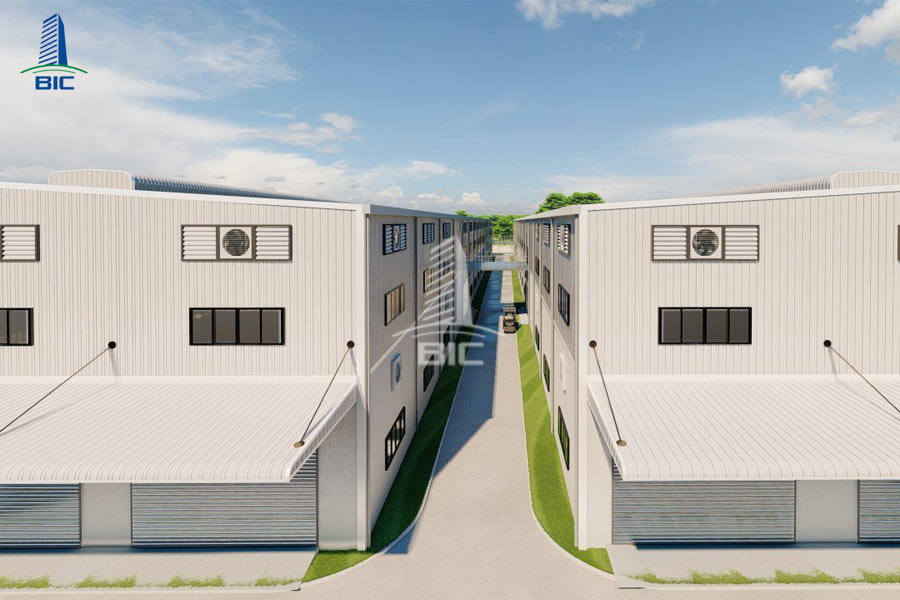
3. Professional construction team
- The ventilation system needs to be meticulously planned, with precise calculations regarding installation locations, suitable system types, and investment costs.
- A team of experienced technicians ensures quality construction, commits to completion timelines, and demonstrates long-term operational performance.
Applying the correct principles helps the natural ventilation system operate efficiently, reducing the temperature in the factory, improving the working environment, and saving operational costs.
Implementing natural ventilation in industrial building design offers significant benefits such as improved air quality, reduced environmental temperature, energy savings, and lower operational costs. Choosing the right method not only protects workers' health but also enhances production efficiency, creating a comfortable and sustainable working environment for businesses.
If you need advice on construction design industrial buildings, please contact BIC immediately!