The rapid expansion of manufacturing relocation and industrial real estate development is creating significant opportunities for investors. However, it also brings tremendous pressure when it comes to turning projects into reality. In a construction market where quality contractors and unreliable providers coexist, making the right decision when entrusting assets worth tens or even hundreds of billions of VND has never been an easy task.
In reality, an industrial factory is far more than a steel structure with a roof. At its core, it is a “money-making machine” that must operate safely and efficiently for decades. A single mistake in selecting an inexperienced design-build contractor can expose investors to critical risks such as budget overruns, project delays, and long-term issues including roof leakage, structural settlement, and costly maintenance problems.
So, what do investors truly need from a contractor? In the article below, BIC breaks down the five critical criteria that can help investors accurately evaluate and select a factory construction partner with both the capability and commitment required for project success.
For investors, promises on paper and impressive presentations mean far less than completed projects that can be seen and verified. Practical experience is the strongest assurance of a successful and secure industrial factory project.
A contractor may have successfully delivered dozens of commercial buildings, but that does not necessarily mean they possess the expertise required to solve the complex challenges of an industrial manufacturing facility. Investors need a partner with direct experience in factory construction.
- Industry-specific experience: Prioritize contractors who have completed projects similar in scale and industry to your business. For example, a textile factory requires sophisticated ventilation and cooling systems, while a food processing facility or cold storage warehouse must comply with strict hygiene and microbiological standards.
- On-site verification: Do not hesitate to request site visits to completed projects. Seeing operational factories firsthand and speaking directly with previous clients will provide valuable insight into structural quality, material durability, and the contractor’s level of responsibility after project completion.
People are the foundation of every successful project. A durable and highly functional factory does not appear by chance, it is the result of experienced engineers and architects with deep expertise in industrial design and construction.
- Understanding operational requirements: Engineers must not only excel in structural steel and reinforced concrete design but also understand logistics flow, production lines, and the load-bearing requirements of heavy industrial equipment.
- Problem-solving capability: The practical experience of project managers, site managers, and supervision teams allows them to anticipate risks and respond effectively. This ensures close coordination between design and construction, eliminating the costly scenario where “the design says one thing, and the construction does another.”

Budget control is often one of the biggest concerns for investors. However, a reputable contractor will demonstrate that cost savings do not come from cutting corners or reducing quality standards. Instead, the key lies in intelligent solutions developed from the earliest design stages.
Many investors mistakenly believe that construction scosts depend solely on steel and cement prices. In reality, more than 70% of cost-saving opportunities are determined during the design phase.
- Structural optimization: An effective design accurately calculates loads, spans, and column grids. Experienced engineers can develop structural solutions that minimize unnecessary material usage while ensuring complete safety in terms of load-bearing capacity and deflection control.
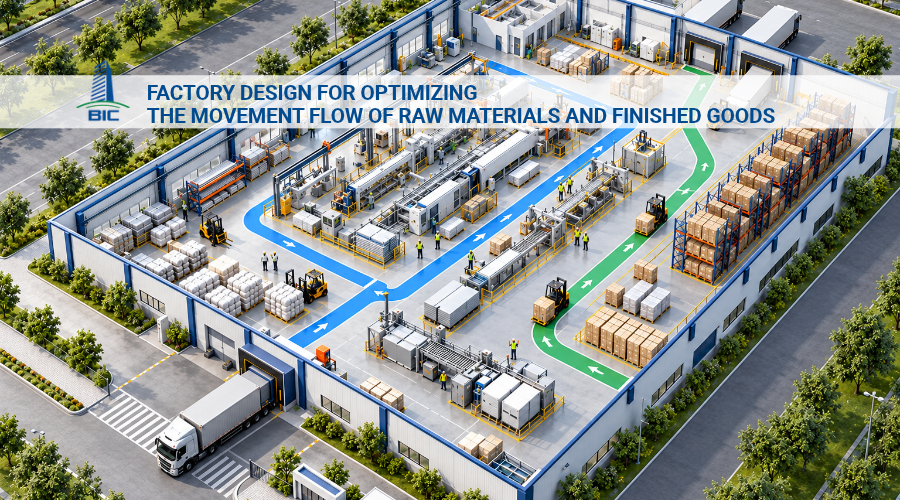
- System integration: Within an industrial factory, conflicts between structural, architectural, and MEP systems are among the leading causes of expensive modifications and rework. A professional contractor develops coordinated solutions from the beginning, ensuring efficient layouts for traffic flow, pipelines, electrical systems, and fire protection systems. This not only reduces construction costs but also ensures smooth manufacturing operations.
In modern construction, a contractor’s ability to apply advanced technologies is a major advantage for investors.
- Building Information Modeling (BIM): Instead of relying solely on 2D drawings, BIM enables investors to visualize the entire project through an interactive 3D model. Its greatest value lies in detecting system clashes before construction begins. Correcting errors in software is significantly less expensive than making changes on-site.
- Pre-Engineered Steel Buildings (PEB): Considered the gold standard for modern industrial facilities, PEB structures are manufactured with millimeter-level precision in factories before being transported for assembly. This approach can reduce construction time by up to one-third compared to traditional reinforced concrete methods while providing large column-free spaces that support future production expansion and layout flexibility.
No matter how perfect a design may be, it remains only a concept without strong execution capabilities. Once construction begins, project schedule and safety become the most accurate indicators of a contractor’s project management expertise.
In business, time equals money. Even a one-month delay can result in lost revenue, postponed return on investment, and potential contractual penalties due to missed delivery deadlines.
- Transparent master schedule: A reputable contractor will provide a detailed project timeline, often using Gantt charts, clearly allocating time for each construction stage—from piling and foundations to steel erection, roofing, and finishing work. This allows investors to monitor progress and verify milestone completion.
- Supply chain management: One of the primary causes of construction delays is material shortages or fabrication setbacks. Professional contractors maintain dedicated procurement teams that coordinate material ordering and delivery schedules with site activities, ensuring labor and equipment remain productive at all times.
Some investors focus heavily on cost and speed while underestimating site safety. However, a single serious workplace accident can lead to project suspension, major financial losses, and long-term damage to both the contractor’s and investor’s reputation.
- Comprehensive HSE management system: Investors should seek contractors with dedicated Health, Safety, and Environment departments. From personal protective equipment (PPE) enforcement and alcohol testing to hazard zone management, safety must be treated as a non-negotiable discipline.
- Safe execution of industrial construction activities: Factory construction often involves high-risk operations such as lifting large steel structures, installing extensive roofing systems, and working with medium-voltage electrical infrastructure. Contractors must prepare and implement thoroughly reviewed Method Statements to minimize risks and ensure safe project completion.
Once a project enters the execution stage, cash flow becomes the lifeblood of the construction site. Even technically capable contractors can become a risk if they lack financial stability or fail to provide transparent cost estimates.
Many investors have experienced difficulties working with contractors who depend entirely on project advances to sustain operations. When material prices fluctuate or unexpected issues arise, these contractors often struggle financially, causing project delays or complete stoppages.
- Operational independence: Financially strong contractors can procure materials in large quantities, secure favorable supplier pricing, and mobilize heavy equipment without relying solely on client payments.
- Risk protection: Solid financial resources allow contractors to maintain construction momentum even when administrative procedures temporarily delay investor or bank disbursements.
Cost overruns are among the greatest concerns for any investor. Extremely low initial quotations often conceal incomplete quantities or vague material specifications, leading to numerous variation orders during construction.
- Detailed Bill of Quantities (BOQ): A professional contractor provides a comprehensive estimate that specifies every bolt, square meter of roofing sheet, material brand, specification, and origin. This transparency enables investors to maintain precise budget control.
- The advantage of Design & Build: The Design & Build model is increasingly preferred for industrial factory projects. When a single contractor assumes responsibility from concept development through project handover, they typically commit to a fixed lump-sum budget. This eliminates disputes between designers and builders and significantly reduces the risk of unexpected costs.

A common mistake among investors is focusing only on construction while overlooking the importance of legal compliance and long-term facility performance. A truly professional contractor continues supporting the client long after construction equipment leaves the site.
Building an industrial factory in Vietnam requires navigating a complex regulatory framework. A project may be physically complete, but without proper legal approvals or fire safety compliance, it cannot legally operate.
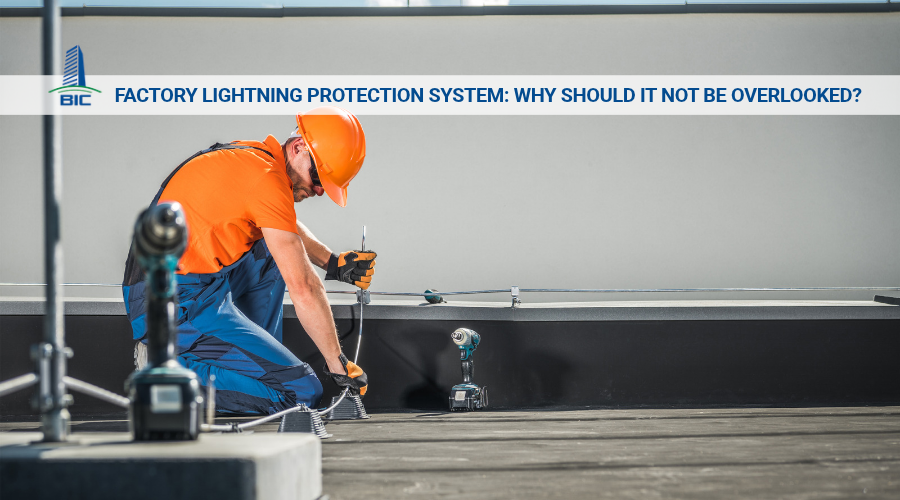
- Expertise in fire protection and environmental regulations: These areas represent major challenges for many businesses. A reputable contractor understands current regulations and develops compliant design-build solutions from the outset. They can also support investors throughout design approval and fire safety acceptance processes.
- Completion and operational approval: Contractors should assist in preparing quality management documentation, as-built drawings, and all necessary records for project completion certification, enabling investors to commence production operations as planned.
Industrial facilities often encounter issues such as roof leakage, concrete floor cracking, settlement, or MEP system failures after several years of operation. At this stage, the contractor’s after-sales service becomes a critical factor.
- Clear structural warranty commitments: Investors should choose contractors willing to provide written warranties, particularly for structural components, with coverage periods ranging from five to ten years.
- Rapid response capability: In an operating factory, even a small roof leak above an electronics production line can result in substantial financial losses. Investors need contractors with dedicated service teams capable of responding within 24 to 48 hours to minimize operational disruptions.
Constructing an industrial factory is a long-term investment that requires both financial commitment and strategic planning. As discussed above, what investors truly need from a contractor extends far beyond competitive material prices or construction rates. They need a comprehensive solution that includes intelligent design, safe and timely construction execution, financial transparency, and strong legal support.
Rather than searching for a contractor who simply follows instructions, investors should seek a strategic partner—one who is willing to challenge assumptions, propose better solutions, share project risks, and contribute to the long-term success of the business.