For any business, the decision to expand production capacity or build a new facility is always a significant strategic move. As soon as the idea is conceived, the first and most critical question raised in the boardroom is: What is the investment cost per square meter? Obtaining an accurate financial estimate is the key to proactively managing capital flow and protecting profit margins throughout the project.
However, the reality of the industrial construction market contains numerous financial pitfalls. Many contractors intentionally provide preliminary factory construction quotations with extremely low prices during the bidding stage to secure projects more easily. Yet once actual construction begins, a series of unexpected additional costs often emerge due to unclear scopes or incomplete technical calculations, putting investors in a difficult financial position and causing serious delays to project schedules.
The essence of a transparent cost estimate never comes from a generic figure applied to every project. Instead, it is the result of numerous complex variables, ranging from soil conditions and building scale to the overall design and construction solution. In this article, BIC will break down the key factors that directly influence construction budgets, providing a practical guide to help investors take control of their finances and manage project risks effectively.
To manage capital effectively, investors must first abandon the idea that a fixed price formula can be applied to every project. Industrial construction is not like mass-produced consumer goods; each project is a unique entity shaped by its location, operational requirements, and scale.
Many businesses planning to expand their facilities often ask contractors to provide a construction cost based on price per square meter. This is known as a preliminary estimate based on experience.
Such estimates are useful only for initial planning purposes, helping business owners gauge the scale of investment required. They should never be used as the basis for signing a construction contract.
In contrast, an accurate, reliable, and legally valid factory construction quotation must be based on a detailed Bill of Quantities (BOQ). This estimate can only be prepared after both parties have finalized and approved the complete factory design documents.
A BOQ provides a detailed breakdown of every item, from structural steel quantities and foundation concrete volumes to the number of connection bolts required. This transparency allows investors to understand exactly how every dollar of their budget is being spent.
The desire to minimize costs is often the greatest weakness that unreliable contractors exploit.
When confronted with quotations significantly lower than the market average, business owners should remain highly cautious of the following tactics:
- Ambiguity in Material Specifications and Brands: Contractors may use vague descriptions such as “standard structural steel” or “high-quality roofing sheets” without specifying manufacturers, brands, or exact material thicknesses. Once factory construction begins, these materials may be replaced with lower-grade alternatives, allowing the contractor to increase profit margins at the investor’s expense.
- Deliberately Omitting Auxiliary Works: This is one of the most common tactics used by irresponsible contractors. Essential items such as drainage systems, sidewalks, loading ramps, and internal road compaction may be excluded from the initial quotation to artificially reduce the total project cost. When construction is already underway, investors have little choice but to approve costly change orders because the project cannot be completed or approved without these critical components.
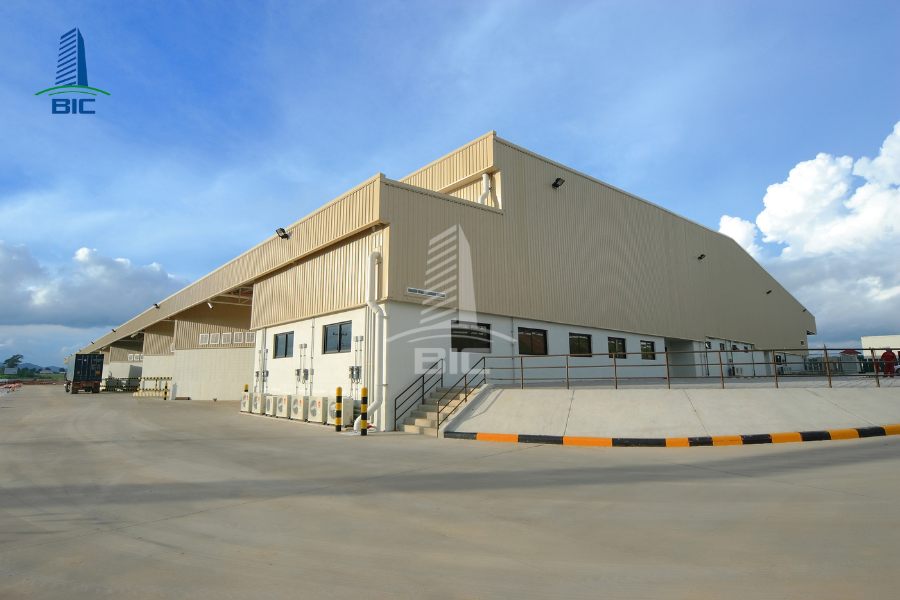
To confidently manage project finances, investors should understand the five major variables that determine the total construction budget.
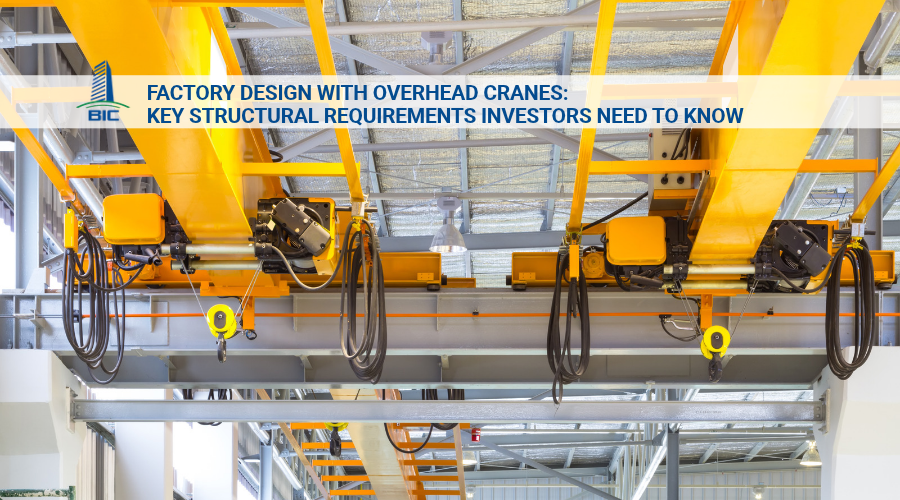
The intended function of the factory is the starting point that shapes all technical and financial requirements. A facility designed for garment manufacturing, packaging, or light electronic assembly has very different structural demands compared to a heavy machinery fabrication or steel casting plant. Heavy industrial facilities require floor systems capable of withstanding substantial loads from machinery and continuous truck traffic. Many projects also require overhead cranes, which necessitate reinforced columns and heavier steel framing systems.
Furthermore, businesses operating in pharmaceutical or food-processing industries often require GMP-compliant cleanrooms equipped with insulated panels and centralized humidity-controlled HVAC systems. These requirements significantly increase factory construction costs compared to standard warehouse facilities.
In industrial construction, economies of scale play a major role in cost optimization. When businesses develop projects with large floor areas, the investment cost per square meter tends to decrease significantly. Contractors can optimize equipment mobilization, crane operations, site management facilities, and material procurement, benefiting from better discounts from suppliers.
However, architectural requirements also heavily influence costs. If production processes require large clear spans with minimal interior columns, factory designers must use larger steel sections and more sophisticated bracing systems. This increases overall steel consumption and consequently raises construction costs.
This category represents one of the largest portions of the project budget and is also where pricing ambiguity most commonly occurs. The pre-engineered steel frame and building envelope materials account for a significant percentage of total project costs. Even small changes in finishing material selections can create substantial financial differences.
For example, constructing full-height masonry walls generally requires more labor and time than installing modern insulated sandwich panel systems. Similarly, applying a standard epoxy floor coating costs considerably less than a 2mm self-leveling epoxy system designed to resist chemicals and heavy loads.
Architectural designs may appear identical, but foundation costs can vary dramatically depending on site conditions. This objective factor plays a decisive role in ensuring long-term structural stability. If the project site is located on firm clay or naturally stable soil, simple shallow foundations may be sufficient and highly economical.
However, facilities built on soft riverbank soil, reclaimed land, or low-lying industrial zones often require extensive ground improvement measures. Investors may need to allocate substantial budgets for deep spun concrete piles or large-diameter bored piles to prevent future settlement issues.
Time is money. Pressure to complete facilities quickly in order to install production equipment and fulfill customer orders is a common challenge for manufacturers. When accelerated schedules are required, contractors must increase manpower, implement overtime work, mobilize additional lifting equipment, and arrange expedited material deliveries.
These measures inevitably increase factory construction costs. In addition, expenses associated with legal procedures—such as environmental impact assessments, fire protection design approvals, and compliance with updated regulations—must be incorporated into the overall investment budget to avoid financial bottlenecks during project completion and acceptance.
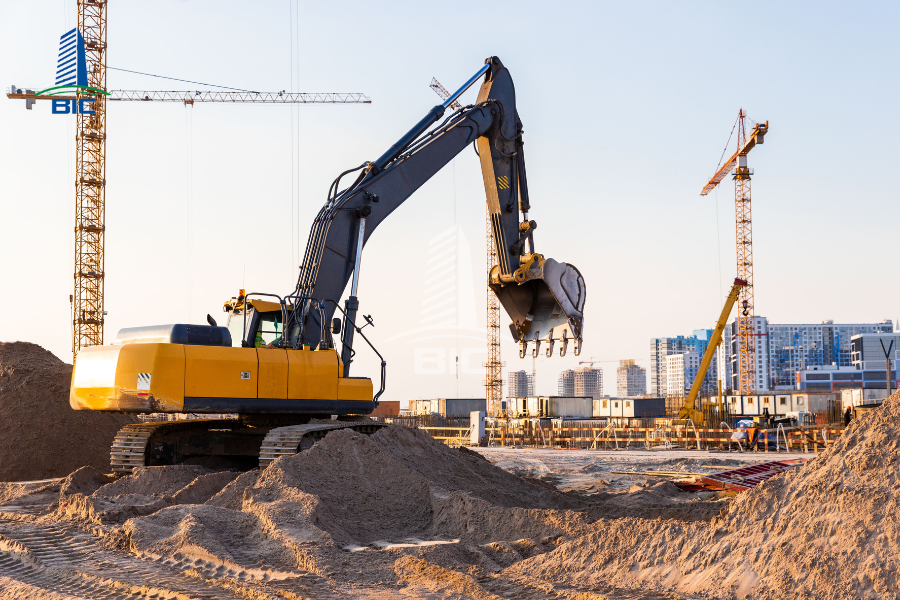
When confronted with a high construction budget, many investors instinctively ask contractors to reduce labor costs or source cheaper materials. However, such measures only address the symptoms rather than the root cause and often create long-term risks. The most effective and sustainable cost-saving strategy begins during the building design phase.
A factory design developed by experienced structural engineers serves as the most effective tool for optimizing steel consumption.Skilled engineers understand how to distribute structural loads efficiently, increasing material thickness where required while reducing unnecessary steel in low-stress areas.
This engineering precision eliminates excess steel resulting from overly conservative design approaches. It is important to remember that saving even a few dozen tons of steel during the design phase can translate into hundreds of millions of Vietnamese dong in project savings without compromising safety or quality.
Modern three-dimensional modeling technologies allow engineers to visualize the entire facility before construction begins.Potential conflicts between structural steel systems, fire protection pipelines, electrical cable trays, and ventilation ducts can be identified and resolved digitally.
By eliminating errors early, businesses can avoid costly modifications, demolition work, and re-fabrication during construction.
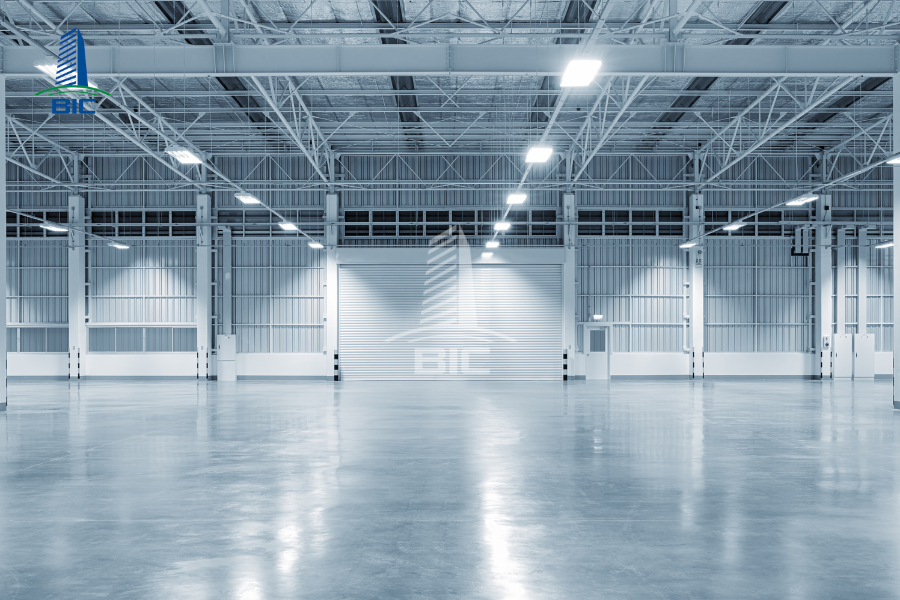
Project delivery methods play a crucial role in determining the stability of investment capital. Communication gaps between design consultants and construction contractors are among the leading causes of budget overruns.
When businesses hire separate design and construction firms, disputes often arise whenever issues occur.Contractors may argue that the design is impractical and demand additional payments to implement revisions. By contrast, the Design-Build model assigns full responsibility to a single entity.
Every architectural and engineering solution is reviewed by both designers and construction professionals before implementation. This integrated approach allows contractors to offer more reliable and stable factory construction quotations while minimizing the risk of cost disputes.
Large industrial contractors often own their own pre-engineered steel fabrication facilities.This advantage allows them to control material sourcing directly, eliminate intermediary costs, and synchronize manufacturing schedules with on-site construction activities.
As a result, they can offer more competitive pricing while protecting investors from fluctuations in steel and cement prices.
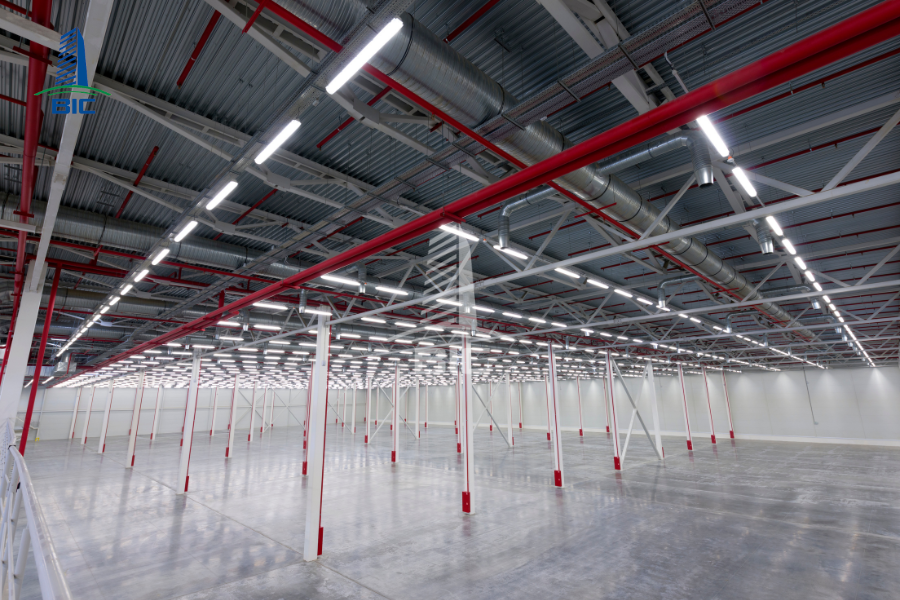
To avoid being influenced by attractive but misleading figures, company executives should evaluate construction estimates with the mindset of a risk management professional.
When reviewing a factory construction quotation, investors should skip the summary page and examine the detailed BOQ first. Key technical specifications to verify include:
- What concrete grade is specified for foundations and floors? (For example, M250 or M300? Are surface-hardening additives included?)
- What type of structural steel is specified? (SS400, Q345B, or another grade?)
- What are the specified brands and thicknesses of roofing and wall cladding materials? (0.45 mm or 0.50 mm? Which manufacturer?)
Clarifying these details enables fair and accurate comparisons between contractors while preventing situations where lower bids are achieved through inferior materials.
An impressive quotation is meaningless if the contractor lacks the ability to deliver the project successfully. In addition to reviewing financial proposals, investors should conduct thorough assessments of a contractor’s actual capabilities:
- Request site visits to completed industrial factory projects of similar scale to inspect welding quality, floor flatness, and coating performance.
- Evaluate safety management practices, workforce discipline, and equipment management systems.
A contractor with strong organizational capabilities will consistently deliver projects on schedule, minimize hidden costs, and protect your investment.
The best factory construction quotation is not necessarily the cheapest one.Rather, it should be a transparent estimate based on a scientific quantity breakdown, accurately reflecting technical requirements and fully supporting the long-term operational needs of the business.
Investing seriously in factory design from the beginning and selecting a reputable general contractor with a partnership-oriented mindset is the smartest strategy. This approach not only eliminates the risk of uncontrolled financial overruns but also ensures that the facility remains durable, reliable, and capable of supporting the long-term prosperity and sustainable growth of the enterprise.